Now available: The 2026 State of Our Data Report
We are excited to release the third annual State of Our Data report! The report provides the Charlotte Regional Data Trust Board of Directors, as well as our communities, partners and stakeholders with an annual update and summary of our community data ecosystem. The report helps to tell the story of the Data Trust by documenting the data we hold in trust, who is represented in the data, how people are linked across the organizations that serve them and how the data has been used for impact.
We use this annual information to inform representation on the Board and its committees, to guide our communication and dissemination strategies, and to help us monitor the extent of data coverage across key quality-of-life domains and across our region. The report provides a public record of how our community data ecosystem grows and evolves to better meet the needs of our communities. This report documents data and work during calendar year 2025.
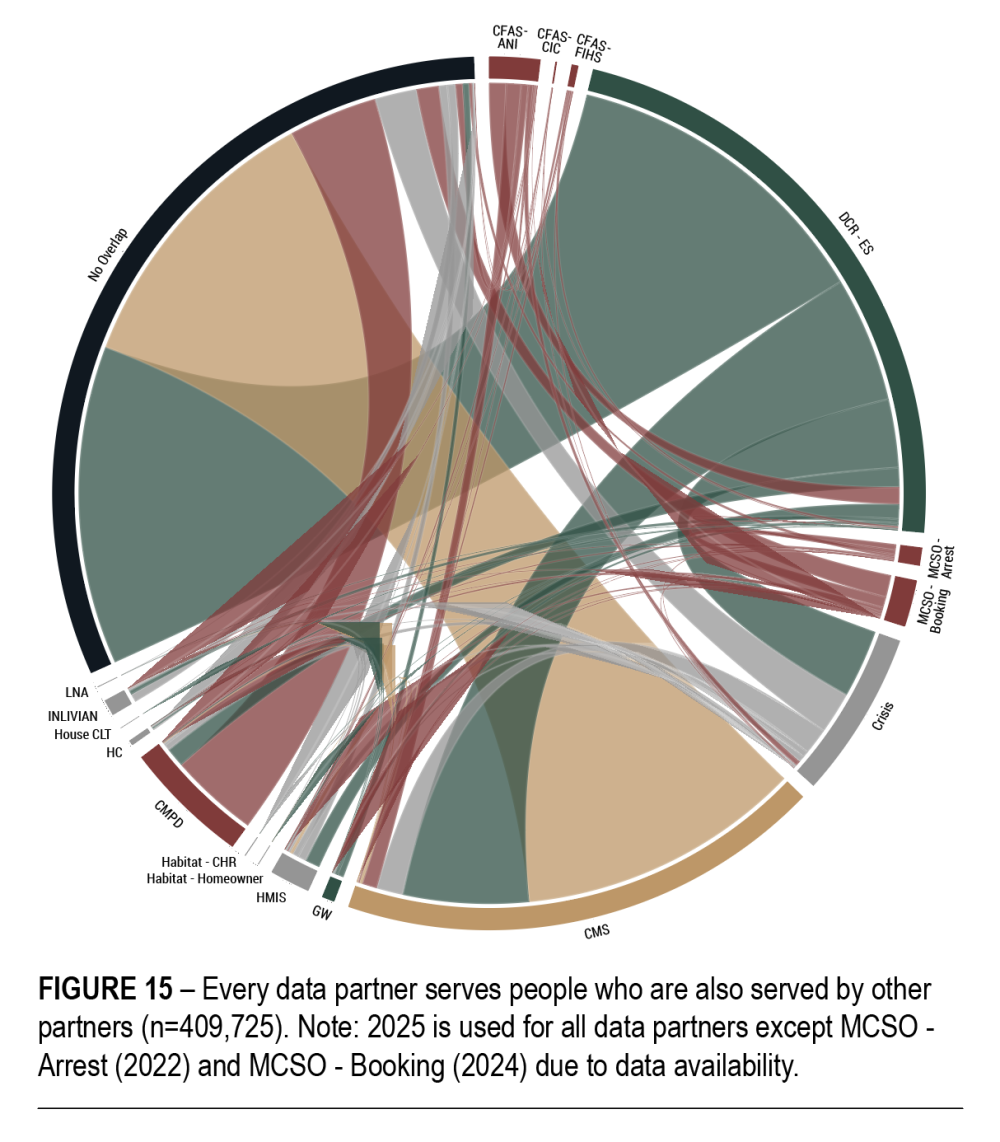
Since 2016, over one million (1,161,819 to be exact) unique individuals’ administrative data have been reflected in the Data Trust, and we know that every data partner serves people who are also served by other partners. There is much to discover from using this data.
The State of Our Data Report highlights data and accomplishments from the 2025 calendar year at the Charlotte Urban Institute and Data Trust. It includes the key findings below.
Data influence
- We grew participatory governance by appointing our first Community Data Oversight Committee members who represent the people reflected in the administrative data of the Data Trust.
- We added one data partner to the analyses in the report: Lakeview Neighborhood Alliance
- The Data Trust included 397,572 unique people, representing one-third (33%) of Mecklenburg County’s residents—this is slightly less (-4%) than in 2024.
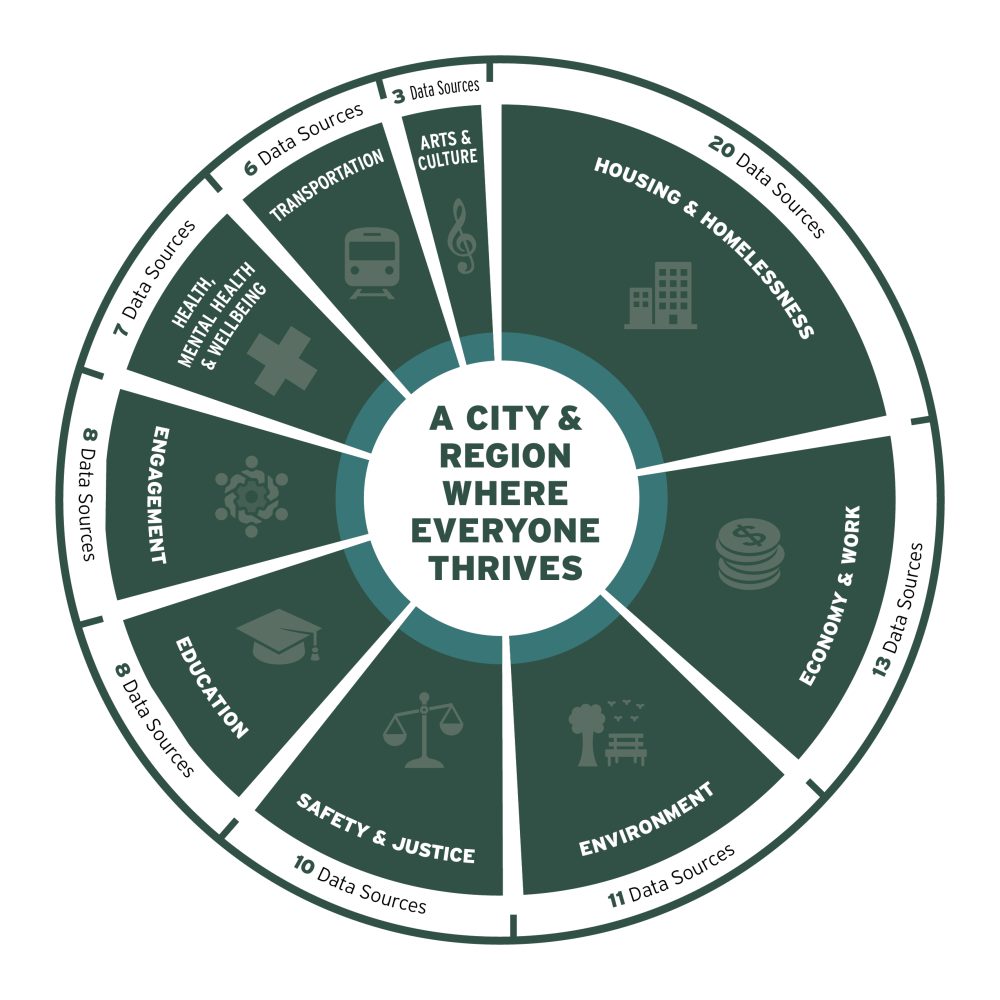
- Thirteen more partners joined the Data Trust by either signing or renewing agreements. This includes completely new partners, partners who were involved previously and have re-engaged and partners who provided data for a single project. We focused on building data partnerships in the Environment and Engagement quality-of-life domains.
- Of people represented in the Data Trust, 22.3% (n=88,733) overlap with two or more agencies (a -1% change from last year).
Representation
- The majority of people represented in the Data Trust identified as Black or African American (46.6%; n=185,388), which is nearly the same as the share of individuals who identified as Black or African American in last year’s report. This is considerably higher than the proportion of Black residents in Mecklenburg County. Nearly 22% of people (n=86,657) identified as White and 15.9% (n=63,078) identified as multiracial.
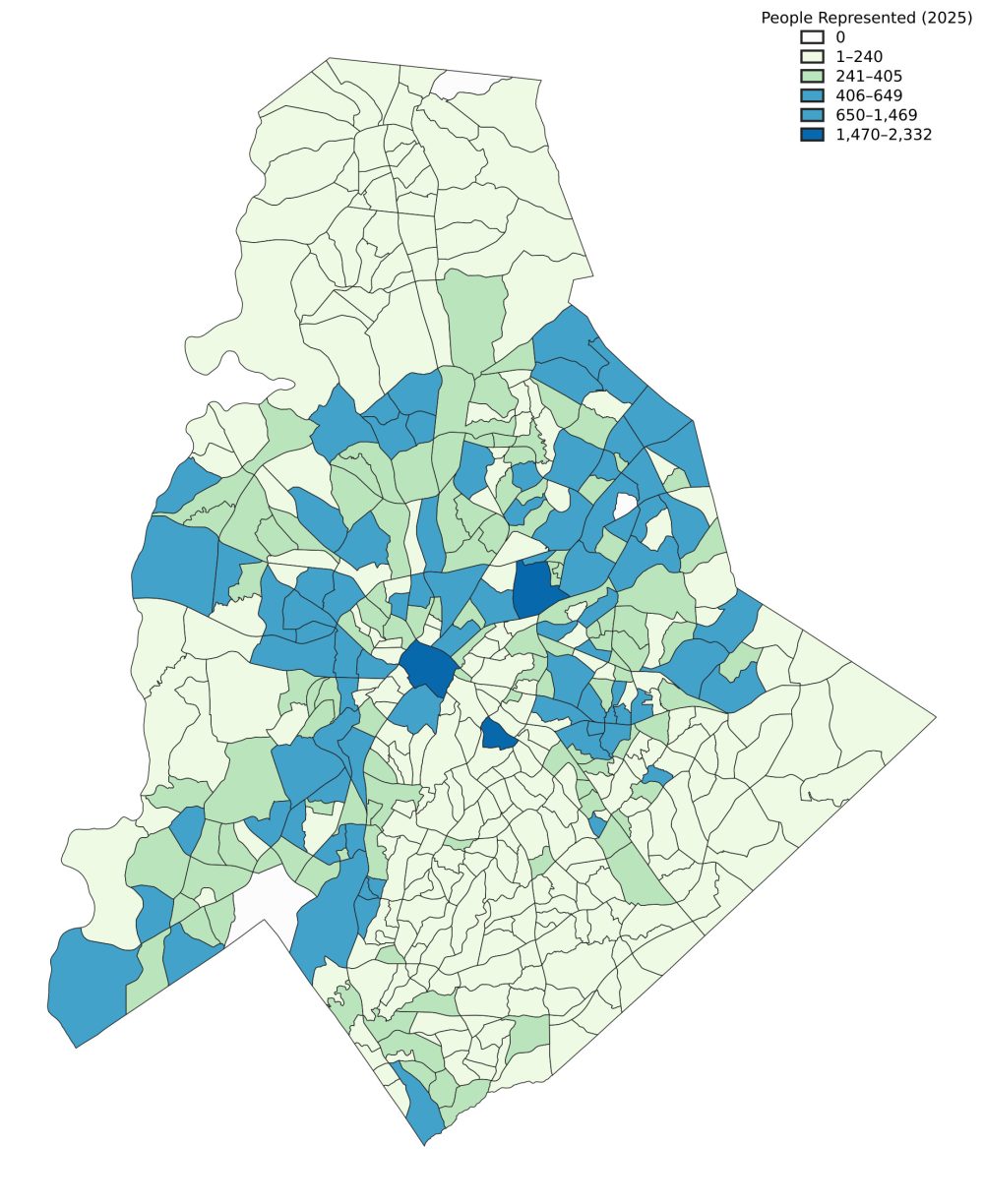
- People in the Data Trust were represented in nearly every neighborhood, with the highest numbers in neighborhoods along Monroe Road/Wendover Road, Uptown and along West Sugar Creek Road/I-85/NorthTryon Street (n=361,078)
Data use and impact
- At the Institute, 21 new projects started in 2025, two were continued and 11 projects were completed for a total of 34 active projects. The three most studied quality-of-life domains across all of the Institute’s work in 2025 were Housing and Homelessness, Safety and Justice, and Economy and Work.
- In 2025, there were a total of 20 active DLR projects: eight DLRs were submitted and approved, seven projects were completed, and five projects continued from previous years. The number of DLRs submitted and approved was 33% (n=2) more than in 2024.
- Through the Impact, Data and Evaluation Academy, we served nearly 100 (n=96) organizations, helping them build internal capacity around data and evaluation.
Interested in becoming a data partner or requesting data? Email DataTrust@charlotte.edu.