Articles

by Evan Wright, Ardrey Kell High School
I have always been interested in medicine and plan to pursue a career in the medical field. That interest grew through my participation in Science Olympiad, where I competed in the Disease Detectives event. Being tested on epidemiology and pathology gave me my first real look at how population-level patterns shape human health. However, as I looked at the broader medical landscape, a statistic made me pause: only about 5–6% of physicians in the United States are Black. That disparity made me question: what can I do right now, as a high schooler, to support and educate my community, rather than waiting until medical school to begin contributing?

by Sydney Idzikowski
We are excited to release the third annual State of Our Data report! The report provides the Charlotte Regional Data Trust Board of Directors, as well as our communities, partners and stakeholders with an annual update and summary of our community data ecosystem. The report helps to tell the story of the Data Trust by documenting the data we hold in trust, who is represented in the data, how people are linked across the organizations that serve them and how the data has been used for impact.
by Asha Ellison
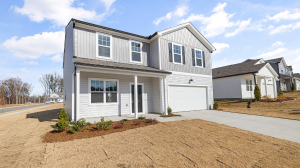
Housing affordability involves much more than the price someone pays for a roof over their head. Discussions about the price of housing and associated costs are just the beginning of the conversation.
This summer, in collaboration with the City of Charlotte, the Charlotte Urban Institute began a series called “Affordable housing in Charlotte,” exploring the city’s Housing Trust Fund, or HTF, and what its investments mean for the people and communities they serve. The HTF uses voter-approved housing bonds to help create and preserve affordable housing by supporting the construction of new units and the conversion of existing housing into affordable uni[…]

by Haley Cooper
Charlotte’s nonprofit professionals can see change unfolding in the communities in which they work. However, not all nonprofits feel confident they can measure these changes – or that they have the right systems in place to even try.
At the Impact, Data and Evaluation Academy, we recognize that nonprofits may have questions abou[…]

by Sydney Idzikowski
In 2025, there were 397,572 unique people represented in the Charlotte Regional Data Trust data, about 33% of Mecklenburg County’s population.
If that number reflected the population of a city, it would be the THIRD LARGEST in North Carolina. Curious about the characteristics of those individuals? Let’s take a closer look at what the data show, together.
by Charlotte Urban Institute
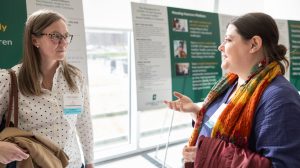
The UNC Charlotte Urban Institute seeks the eighth cohort of faculty fellows to research issues related to economic mobility and quality of life arenas in the Charlotte region, with support from The Gambrell Foundation […]

by Asha Ellison, Angelique Gaines, Jenny Hutchison and Eric Moore
Affordable housing is about more than having a place to live. For residents, housing stability can affect whether they are able to remain in their homes and communities, while access to additional supports can help address challenges that extend beyond the cost of rent. For Charlotte, these considerations are particularly important as the City continues to invest public dollars in affordable housing through its Housing Trust Fund, or HTF.
The first article in the “Affordable housing in Charlotte” series explored Charlotte’s growing housing affordability challenges, the role of the HTF and why long-term investment in affordable housing matters. It also introduced the broader research project, explored through the second article, which begins to examine several dimensions of the HTF, including its relationship to neighborhood stability and the types of supports available to affordable housing residents. This, the third article in the series, focuses on two questions: How is housing stability changing in neighborhoods with Housing Trust Fund-financed properties, and what does research tell us about supports beyond rental assistance that can help affordable housing resi[…]

by Sydney Idzikowski
The Charlotte Regional Data Trust is an integrated data system where people can make requests of its data for research, evaluation or planning purposes. The Data Trust holds data that represent the Institute’s quality of life domains such as housing and homelessness, education, and safety and justice. Learn more about the projects and requests people have submitted for Data Trust data so far in […]

by Mia Gaddy, Mecca Howe and Kadae Phimia
In January, the Charlotte Urban Institute completed the second phase of a multi-year study to understand the impact of federal administrative changes on Charlotte-area nonprofits. Phase two of the study included both a survey that was distributed to local nonprofit leaders and facilitated focus groups. Data from the January 2026 survey was then compared to data from the first phase of the study, conducted in July 2025. These are the resu[…]
by Fatima Rodriguez Caba
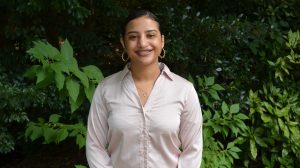
I like to believe that everyone has an interest or hobby they could spend hours talking about. I find particular joy in seeing my family or colleagues’ faces light up when topics like birding, food security or anime are mentioned. More recently, I’ve learned the importance of spending time in someone else’s world and learning what makes their eyes light up.
For just a moment, I’d like to share a piece of my world with you […]
by the Charlotte Urban Institute
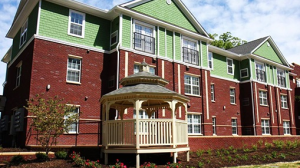
Charlotte’s affordable housing challenges did not develop overnight and a solution to the city’s concerns will take coordinated effort – and time. As home prices and rents continue to outpace wages, and construction costs rise, the City of Charlotte’s Housing Trust Fund, also referred to as HTF, has become one of the community’s primary tools for creating and preserving housing that remains affordable for households with lower to moderate incomes. But understanding whether these investments are making a lasting difference requires looking at more than just the number of housing units built to meet immediate and projected needs – it also means asking who is being served and how stable, affordable housing shapes these residents’ li[…]

by Sydney Idzikowski and Elaine Jacobs
As a nonprofit organization, the UNC Charlotte Regional Data Trust is governed by a board of directors who are committed to increasing the community’s capacity for data-informed decision-making, and fostering research that impacts the community and deepens understanding of complex community issues. The board has fiduciary oversight over the data and operations of the Data Trust, and also serves in an advisory role over the research and engagement agenda for the Charlotte Urban Insti[…]