How the One Big Beautiful Bill Act changed SNAP benefits for North Carolinians

by Nikki Ferguson and Jenny Hutchison, Ph.D.
Access to affordable food is important to reduce food insecurity and maintain healthy communities. The Supplemental Nutrition Assistance Program, known as SNAP or food stamps, helps to reduce food insecurity by providing benefits for low-income families (see “Closing the (SNAP) Gap” for more information about food insecurity and SNAP). In 2025, SNAP saw significant changes as a result of the passing of H.R.1, otherwise known as “the One Big Beautiful Bill.”
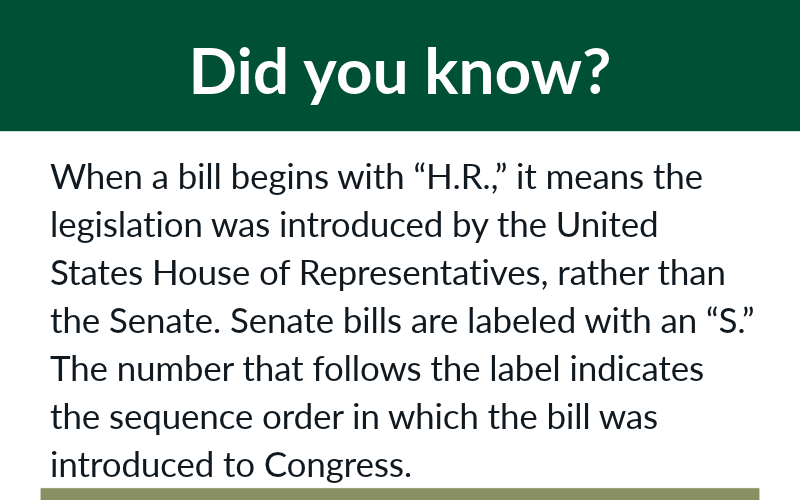
The changes in both eligibility and funding included in H.R.1 could lead to fewer households participating in SNAP. Since the implementation of new eligibility requirements, news outlets such as the NPR and NC Newsline have reported declines in the number of households participating in SNAP nationally and within North Carolina. With SNAP participation typically falling when the country is experiencing an economic expansion1, recent declines in participation appear inconsistent with the current environment of stable employment and rising food prices.
What are the changes?
The changes to SNAP are wide. They include stricter eligibility requirements, increased state- and county-level funding requirements as well as more subtle changes to the total amount of benefits households receive. Below are brief descriptions of the major changes to SNAP included in H.R.1 (note: this list is not all inclusive):
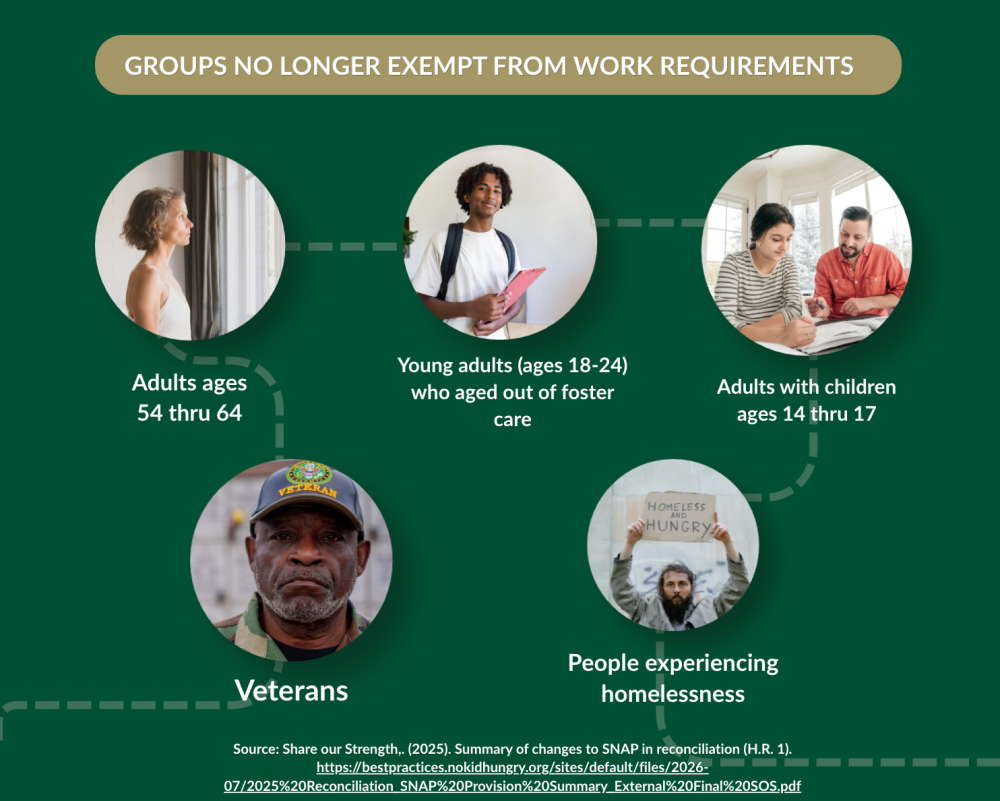
- More groups will need to work to receive benefits. One of the most prominent changes is the removal of exemptions from work requirements for several groups, including older adults, adults with children, veterans, homeless individuals and young adults aging out of foster care. This means individuals who fall into any of these groups will need to submit documentation to prove they are working at least 20 hours a week, volunteering or other approved activities in order to receive SNAP benefits.2,3
People applying for SNAP food benefits could find the paperwork overwhelming. This is especially true for low-income families who are already short on time because they are juggling child care, taking public transit, or working multiple jobs. Individuals who now need to meet the work requirements could seek exemptions if they are disabled, but they may lack the documentation to prove they have a disability. Historically, however, increases in work requirements have hit the most vulnerable SNAP recipients the hardest, frequently causing low-income households and individuals with chronic illnesses to lose access to their benefits. ,
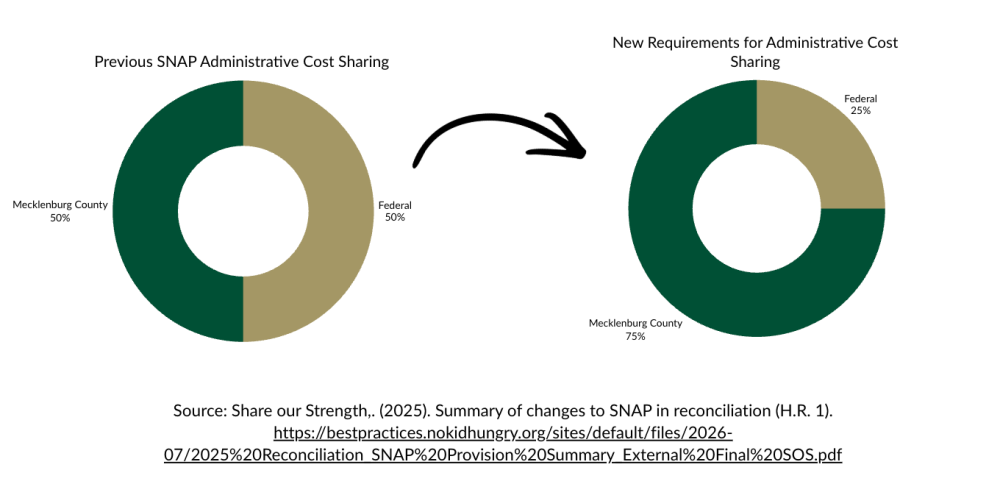
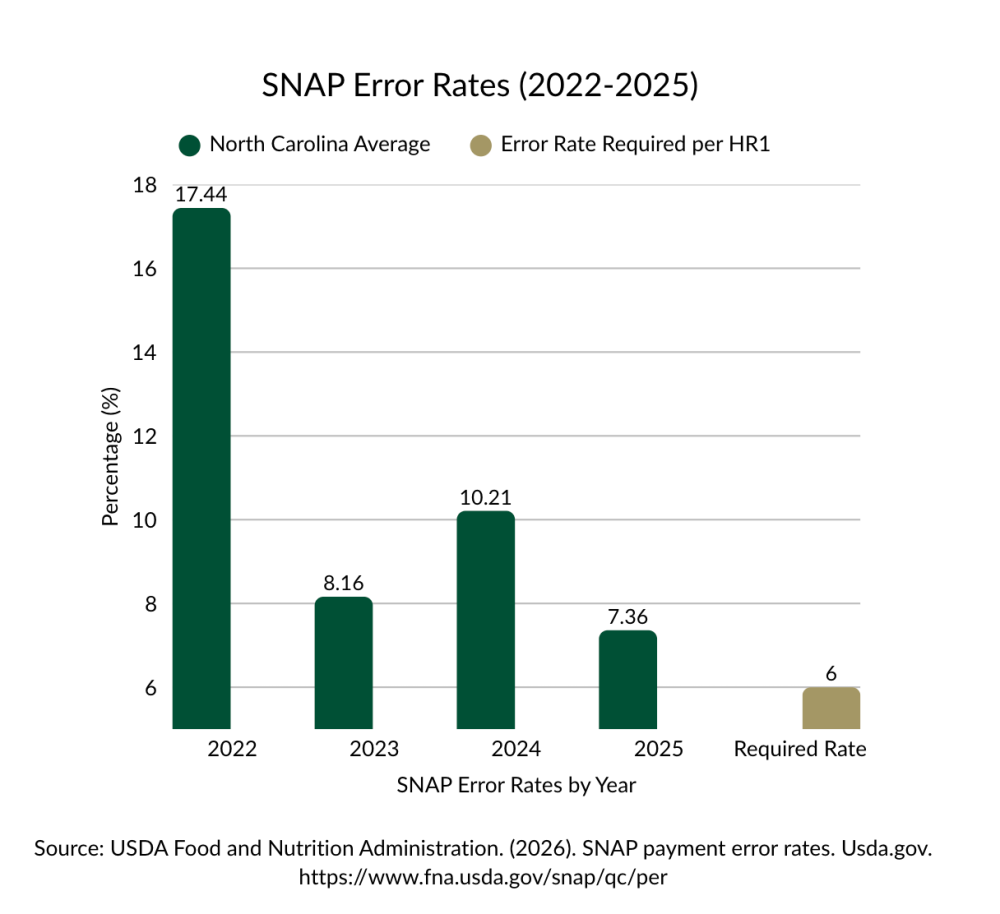
- States bear more financial responsibility. Another major change to SNAP is related to the funding of benefits and administrative costs necessary for overseeing the program. First, the federal government is increasing the share of administrative costs that local governments will be required to cover from 50% to 75%, for North Carolina this would fall to the counties, who administer SNAP in North Carolina. Furthermore, states will be required to reduce the number of over- or under-payments of benefits, collectively referred to as “the error rate.” North Carolina had an error rate for payments of 17.44% in 2022, which has declined to just over 7% in 2025. However, to avoid having to share in the payment of benefits the rate needs to be below 6% according to H.R.1. Efforts to continue to reduce the error rate could be complicated by administrative funding cuts and an increase in monitoring related to work requirements. This could be particularly difficult for smaller counties in the Charlotte metro region with less administrative infrastructure to start with. The result may be higher denials or delays to those that do apply, which are not included in the state’s overall error rate.
Changes to SNAP Administration Cost Sharing
- Changes to eligibility for some legally present noncitizens. Lastly, SNAP changes will impact eligibility for noncitizens, with some legally-present noncitizens no longer able to apply for SNAP benefits. This includes those seeking asylum, refugees, immigrants with Special Immigrant Visas, in addition to battered noncitizens, and survivors of trafficking.4 Effectively, immigrants to the US will need to wait until they have a green card until they can apply for benefits.
- While work requirements began in late 2025, cuts to funding will begin in 2026 and 2027. The timing for the new rules vary with most of the eligibility requirements occurring during the last three months of 2025, with the exception of changes to eligibility for noncitizens which was implemented in February 2026. Funding changes will be implemented in late 2026 and 2027. The reduction in the Federal government’s administrative cost sharing began in October, but the cuts to funding of benefits won’t begin until 2027. However, the cuts to funding of benefits are based on error rates from 2025 and 2026, effectively requiring states to reduce error rates as soon as the bill was passed.
As a result of these factors, we are likely to see a drop in SNAP participation at a time when many are struggling with an uncertain labor market, higher food costs and cuts to Medicaid.
Why does this matter?
SNAP benefits flow through our community in many ways. To begin with SNAP provides food for families that may be facing food insecurity5 – without these benefits families will need to reduce spending on food. Furthermore, SNAP benefits help free up other household funds to pay for transportation and housing. The loss of the SNAP benefits mean families must decide between buying food and paying other bills such as car payments, electricity bills or rent.
SNAP benefits support the local economy. Reducing SNAP benefits will affect local food retailers, as families reduce purchases and shorten their visits. SNAP purchases help maintain local grocery stores as well as large food retailers. Local grocery stores located in low-income neighborhoods may be particularly exposed to the decline in spending.6 A dollar in SNAP benefits translates into $1.54 in local economic activity meaning a loss of benefits will mean less economic activity in the community.
Lastly, North Carolina is one of ten states where the county, instead of the state, administers SNAP benefits. Reductions in cost sharing at the Federal level, included in H.R.1, will mean that county administrators throughout the state will need to decide between moving funding from other initiatives to support increased costs for SNAP or cutting staffing and other resources for the SNAP program.
Examining SNAP participation for Mecklenburg County
In an upcoming study the Charlotte Urban Institute will examine how the changes implemented at the federal level are impacting Mecklenburg County. We will look at how the changes affected participation in SNAP for the county through access to integrated administrative data from the Charlotte Regional Data Trust. With de-identified administrative records we can begin to understand changes in participation, and with the integration of the administrative records we can examine those changes for specific groups such as individuals experiencing homelessness and young adults who have aged out of foster care. While the changes could be modest since the new rules were only implemented in the second half of 2025, and our data is through the end of 2025, they can provide early indicators of what groups are feeling the effects of H.R.1 and set a baseline for subsequent studies.
1 Jones, J. W. (2026). Supplemental Nutrition Assistance Program (SNAP) participation, unemployment, and poverty rates, 1980–2025. Economic Research Service. https://www.ers.usda.gov/data-products/chart-gallery/55722
2 Ndumele, C. D., Factor, H., Lavallee, M., Lollo, A., & Wallace, J. (2025). Supplemental Nutrition Assistance Program Work Requirements and Safety-Net Program Participation. JAMA Internal Medicine, 185(1), 92–100. https://doi.org/10.1001/jamainternmed.2024.5932
3 Gray, C., Leive, A., Prager, E., Pukelis, K., & Zaki, M. (2023). Employed in a SNAP? The Impact of Work Requirements on Program Participation and Labor Supply. American Economic Journal: Economic Policy, 15(1), 306–341. https://doi.org/10.1257/pol.20200561
4 NCDHHS. (2026). SNAP noncitizen eligibility changes. https://www.ncdhhs.gov/snap-noncitizen-eligibility-changes/open
5 Mabli, J., Ohls, J., Dragoset, L., Castner, L., & Santos, B. (2013). Measuring the effect of Supplemental Nutrition Assistance Program (SNAP) participation on food security. United States Department of Agriculture.
6 Bolen, E., & Wolkomir, E. (2020). SNAP Boosts Retailers and Local Economies | Center on Budget and Policy Priorities. Center on Budget and Policy Priorities. https://www.cbpp.org/research/snap-boosts-retailers-and-local-economies
7 Canning, P., & Stacy, B. (2019). The Supplemental Nutrition Assistance Program (SNAP) and the Economy: New Estimates of the SNAP Multiplier (No. 265). United States Department of Agriculture. https://www.ers.usda.gov/media/8907/err-265.pdf?v=97259