Articles

Charlotte and the surrounding counties have changed dramatically over the past 250 years, evolving from an agrarian backwater to a manufacturing powerhouse to a hub of global finance. Our first European settlers’ hope was to support themselves by working the land, but 100 years of agriculture showed our predecessors that local farming was much more […]

[Read the full report here] It was a cold January day in 2018 when eight researchers from UNC Charlotte’s Urban Institute stepped out into the brisk air in Hamlet, a small town in Richmond County, N.C. A dusting of snow from a surprise storm the previous day still covered the railroad tracks adjacent to the […]
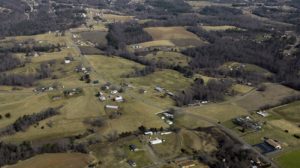
The city of Charlotte has a long reach. While this is certainly not a surprise, we don’t really know much about how Charlotte influences its surroundings and how far this reach extends. We do have some conventions to help us understand the extent to which our region is connected. Metropolitan areas are commonly used to […]
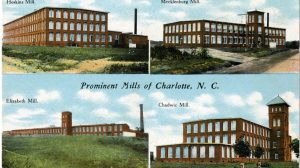
From an agrarian system to an economy based on rural mills and factories drawing workers from former farms and sending goods to Charlotte for distribution, the region undergoes rapid change.

A growing web of infrastructure and physical connections – both within the wider region and between the region and the outside world – has had a profound effect on where growth went, and where it stayed away from. People and industries in the Carolinas Urban-Rural Connection study area followed trading paths, railroads, highways and, now, air service.
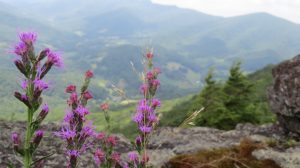
How do you protect a plant that grows only on rocky outcrops at high elevations in the Amphibolite Mountains of northwestern North Carolina? It takes a team.
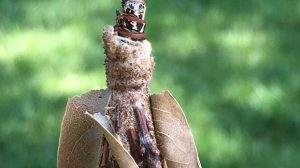
The overall cluster was about the size of my fist. A woven cylindrical core was decorated with willow oak leaves, some of them whole and others torn. They had been applied in an intriguingly symmetrical pattern, creating the effect of wings and a tail. Tiny twigs with swollen buds had also been incorporated into the design, their weight providing a ballast. The creature twirled and fluttered in the breeze, a sylvan ballerina.

Breweries, apartments, hip food halls, creative offices, coworking spaces: Charlotte developers keep finding new uses for the city’s old mills. As a post-war, Sunbelt boomtown, Charlotte has garnered a reputation for tearing down its old buildings and replacing them with sterile plaques to make way for the city’s glittering new skyline. But while many once-grand […]
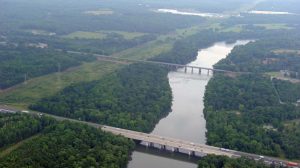
After visiting a city with a waterfront, maybe stopping for a drink and a bite to eat along whichever river or ocean it’s built along, I’m usually left with one overriding thought: “Wow, Charlotte could really use some of this.” Water plays a prominent role in the design and history of most cities, whether it be a river, bay or ocean. And Charlotte’s skyline and downtown sit tantalizingly close-but-yet-so-far from a major river and lake system. So, the question looms: Why isn’t Charlotte built on the water?
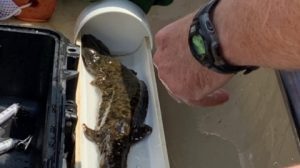
Hellbenders – a species of large salamander with an evocative name – can tell us something about the health of a river. Macroinvertebrates are good indicators of water health across the state. Insects, crustaceans, molluscs, and arachnids can all tolerate water quality in different degrees. Mayflies, caddisflies, stoneflies, hellgrammites are all highly sensitive to pollution. Their presence anywhere indicates good water quality. Dragonflies, damselflies, crayfish and clams are somewhat tolerant of pollution. Black fly larvae, lunged snails, and leeches are all pollution-tolerant.
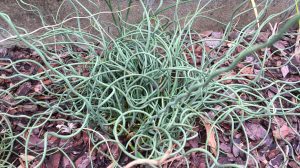
“I call rushes the final frontier,” says Paula Gross, former associate director of the UNC Charlotte Botanical Gardens. “That’s because I know so little about them myself!” A 19th century botanist described the genus as “obscure and uninviting,” she notes. As with so many other plants, my interest in rushes lies at the intersection of […]
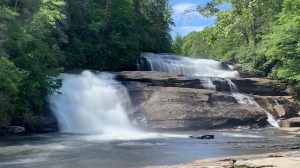
When you think of rare species, your mind might turn to majestic tigers, ferocious grizzly bears or majestic elephants. But how often do you think of bogs, sandbars and the slimy rocks coated in spray? A recent Natural Heritage Program Rare Plant and Natural Communities Workshop in Hendersonville highlighted theimportance of these unusual ecosystems for […]