Streams
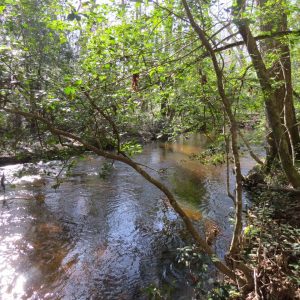
Preserving a ‘black water’ river east of Charlotte: Drowning Creek
In the far southeastern tip of Montgomery County, where Moore, Richmond and Montgomery counties all converge, a stream with an evocative name flows: Drowning Creek. Drowning Creek is a high quality stream, which means it has little pollution and good aquatic diversity. The creek flows southward into the Lumber River, which was originally called Drowning […]
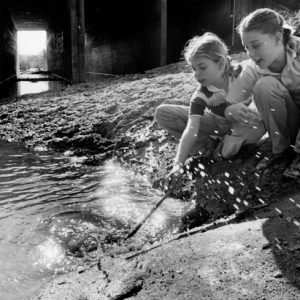
Celebrating creeks, the ‘capillaries’ of our water system
Think of an important waterway: You’re probably picturing a rushing river, a huge lake or a roaring waterfall. But what about the humble creek running through the woods near your house? That’s where most of our waterways start, and if those creeks aren’t healthy, our larger waterways won’t be healthy either. Creek Week is a […]
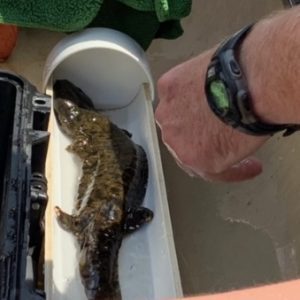
Hellbenders offer a window into water’s health
Hellbenders – a species of large salamander with an evocative name – can tell us something about the health of a river. Macroinvertebrates are good indicators of water health across the state. Insects, crustaceans, molluscs, and arachnids can all tolerate water quality in different degrees. Mayflies, caddisflies, stoneflies, hellgrammites are all highly sensitive to pollution. Their presence anywhere indicates good water quality. Dragonflies, damselflies, crayfish and clams are somewhat tolerant of pollution. Black fly larvae, lunged snails, and leeches are all pollution-tolerant.
How much do you know about Charlotte’s creeks? Take our quiz
I’ve spent much of the past few months researching Mecklenburg County’s creeks, for a PlanCharlotte.org project called KEEPING WATCH on WATER: City of Creeks. A related gallery exhibit opened March 27 at UNC Charlotte Center City. To see a full list of events, click here, or visit KeepingWatch.org for updates. To whet your appetite for […]

‘City of Creeks’ debuts March 27, launches KEEPING WATCH second year
FOR UP-TO-DATE EVENT INFORMATION ABOUT KEEPING WATCH, PLEASE VISIT KEEPINGWATCH.ORG What creek is in your neighborhood? Where did it come from, and where is it going? Why was Charlotte settled amid so many creeks? Are urban streams important? Where does rainwater go? Can we do anything to help with pollution or flooding? Why should we […]
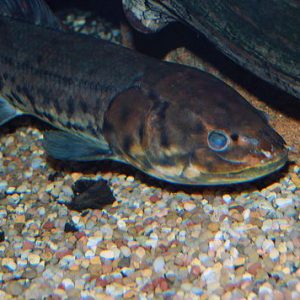
The ancient bowfin – a unique fish
As you kayak along the Uwharrie River, you’ll likely see longnose gar. These strange dinosaur-like creatures are hard to miss, with their large size of 2 to 3 feet, their brownish olive coloring, and long narrow snout and sharp teeth. Another species related to the gar and found in some parts of the state, but […]

A paddle a day keeps the doctor away
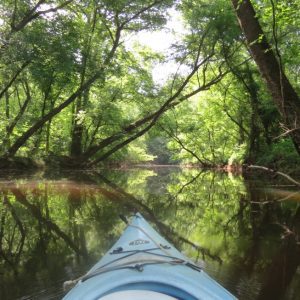
“A paddle a day keeps the doctor away.” That isn’t quite the famous saying, but it rings just as true. Kayaking and canoeing are fun and healthy ways to enjoy the outdoors, and there is plenty of water to be paddled nearby. One of those great streams in the N.C. Piedmont that’s now easily accessible […]
Mountain Creek: A hidden adventure
North Carolina is a beautiful state filled with unique features. The state’s majestic mountains, picturesque Piedmont farmland and tranquil beaches provide a variety of habitats and recreational opportunities. This diversity makes it a marvelous place. With the spectacular beauty of our mountains and coast in North Carolina, the Piedmont often receives less recognition. The Uwharries […]
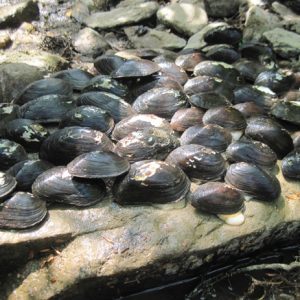
Freshwater mussels: tiny hitchhikers
Recently, I participated in a survey of mussels as part of a post-dam removal monitoring effort at the Densons Creek Nature Preserve in Troy (60 miles east of Charlotte). I joined folks from the U.S. Fish and Wildlife Service and the N.C. Natural Heritage Program as we donned wetsuits or waders and carried viewbuckets (imagine […]
Institute, partners launch 3-year look at environmental topics
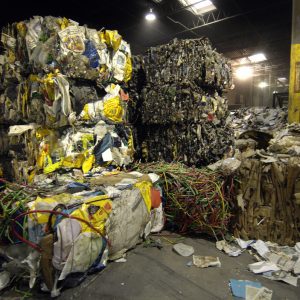
The UNC Charlotte Urban Institute, in partnership with the UNC Charlotte College of Arts + Architecture, has launched KEEPING WATCH, a three-year initiative designed to bring a higher profile to, and engage the public in, issues about the natural environment. The initiative will foster collaboration across various interest groups and disciplines. An exhibit opened Friday, […]