General News
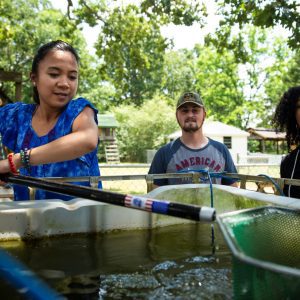
How does philanthropy vary across, and connect, the greater Charlotte region?
Charitable giving is an invisible thread binding people and communities together across the 32-county Carolinas Urban-Rural Connection study region — but how much people give, and what resources are available, varies from place to place. The Carolinas Urban-Rural ConnectionA special project from the UNC Charlotte Urban Institute Read about the project here Introduction: Strengthening ties […]
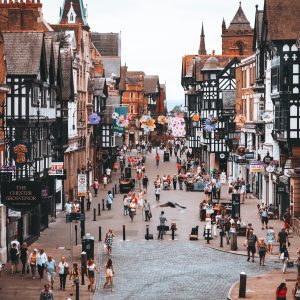
Should Charlotte make one of its major streets pedestrian-only?
Charlotte has a reputation as a car city, but many of its leaders badly want to promote more biking, walking and transit use. That’s one reason an intriguing idea kept surfacing at this week’s City Council Transportation & Planning Committee meeting: Why not take all the cars off a major street in uptown or South […]

Talking Policy: How should we maximize the impact of analysis?
The UNC Charlotte Public Policy Program, in Partnership with Gerald G. Fox Masters of Public Administration Program and the UNC Charlotte Urban Institute, will hold its 2nd annual Talking Policy in the Queen City event on October 2nd from 6:00 to 8:30 p.m. at the Center City campus. This year, guest speaker Dr. Erik Godwin […]
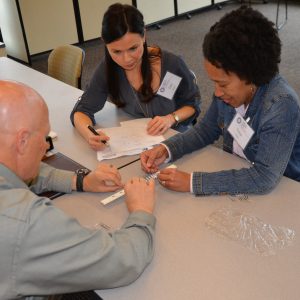
Urban and rural leaders embrace common ground in this program
In telephone calls, emails and chats over coffee or dinner, dozens of business and community leaders in Charlotte and the surrounding suburban and rural communities regularly communicate — sometimes discussing local issues and sometimes not, in conversations that are happening deliberately. For two decades, the non-profit Lee Institute, which promotes civic engagement, has focused on […]
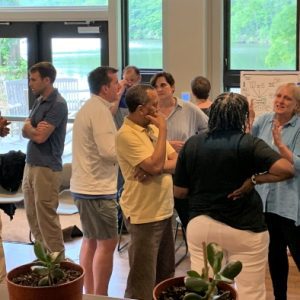
Can these programs bridge the gap between urban and rural leaders?
Are rural leaders different than their urban counterparts? And how can programs that develop leaders bridge the gap between them, if indeed there is one? With leadership emerging as a key issue in research for the Carolinas Urban-Rural Connections project, we asked several leadership programs in the Carolinas about their experiences working with leaders from […]
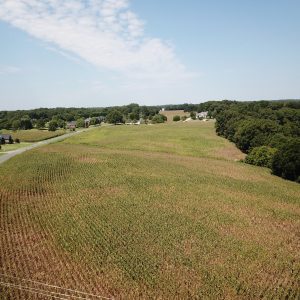
Is there a leadership deficit in rural communities and small towns?
“The more successful towns have a champion. The really successful ones have multiple champions.” We visited Liz Parham, director of North Carolina’s Main Street Program, to learn about how communities across the state are capitalizing on their cultural and natural assets to revitalize local economies. But it was a different type of asset – people […]
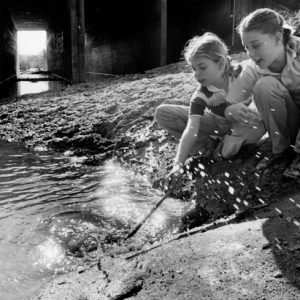
Celebrating creeks, the ‘capillaries’ of our water system
Think of an important waterway: You’re probably picturing a rushing river, a huge lake or a roaring waterfall. But what about the humble creek running through the woods near your house? That’s where most of our waterways start, and if those creeks aren’t healthy, our larger waterways won’t be healthy either. Creek Week is a […]
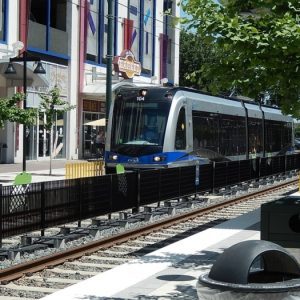
CATS is zeroing in on light rail expansion to Pineville, Ballantyne
The Charlotte Area Transit System took another step towards expanding the region’s transit network this week, with recommendations for how to extend the Blue Line light rail about five miles through Pineville to Ballantyne. At the Metropolitan Transit Commission, staff presented their preferred routes, which would take the rail line across Carolina Place Mall along […]

Historical Overview Part 1: The early development of a connected region
Charlotte and the surrounding counties have changed dramatically over the past 250 years, evolving from an agrarian backwater to a manufacturing powerhouse to a hub of global finance. Our first European settlers’ hope was to support themselves by working the land, but 100 years of agriculture showed our predecessors that local farming was much more […]

The Carolinas Urban-Rural Connection: Strengthening ties to revitalize communities
[Read the full report here] It was a cold January day in 2018 when eight researchers from UNC Charlotte’s Urban Institute stepped out into the brisk air in Hamlet, a small town in Richmond County, N.C. A dusting of snow from a surprise storm the previous day still covered the railroad tracks adjacent to the […]