Publications & Reports

It’s a simple concept: Focus on fewer goals and bigger results. That’s the idea behind the Collective Impact approach United Way of Central Carolinas has adopted. For United Way, that goal for the next 10 years is to increase the graduation rate among the more than 13,000 at-risk children who receive services from 16 United […]
Collective Impact is a collaborative approach that brings together stakeholders working towards shared goals in order to make significant change in communities. The Collective Impact for Children & Youth project was launched by the United Way of the Central Carolinas in the spring of 2012. This 10-year project involves 16 United Way-supported agencies in Mecklenburg […]

It is no small task to get the school bus to your neighborhood each day. Planning starts in March for most North Carolina school districts to open school in August. As buses begin their routes again this year, did you know: North Carolina’s public school districts operate 13,349 public school buses. Those buses travel 180,000,000 […]
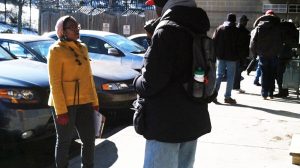
What are the characteristics of Mecklenburg County’s homeless population and how has it changed over time? To try to answer those questions, Mecklenburg County each year performs the Point in Time (PIT) Count, a federally mandated act to determine the prevalence and characteristics of homeless people in the United States. The PIT Count helps communities […]

What are the characteristics of Mecklenburg County’s homeless population and how has it changed over time? To try to answer those questions, Mecklenburg County each year performs the Point in Time (PIT) Count, a federally mandated act to determine the prevalence and characteristics of homeless people in the United States. The PIT Count helps communities […]
The Collective Impact Baseline study is part of United Way’s pilot initiative to increase the graduation rate over the next 10 years for the community’s most vulnerable youth. This data will form the baseline against which United Way and its agencies will be measured in the goal to increase the graduation rate for at-risk children […]

This report examines how men and women in Mecklenburg County fared during the Great Recession. It examines the overall features of the labor market and analyze some of the residual impacts the recession had on families. The goal of this report is to understand the local conditions for women and men during the recession and […]

This report focuses on the disparity in earnings between men and women across industries in Mecklenburg County. The wage gap or ratio is an often cited statistic to highlight the disparity between the earnings of men and women. Most sources cite the wage gap in the United States being between 75 and 80 percent, meaning […]

This report analyzes how women fared in the workplace at the national level after the Great Recession, which ended in June 2009, compared to their status before it began. This report also compares women to their male counterparts before and after the recession in terms of total job growth, job growth in the public sector, […]
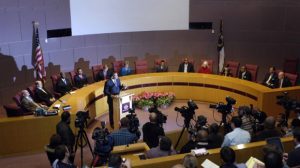
It is commonly expected that consolidating Charlotte and Mecklenburg County will result in less government fragmentation, fewer elected officials and lower the cost of service provision. It very well may, but citizens should know that nothing is guaranteed when it comes to city-county consolidation. And some of the commonly held beliefs about consolidation may not, […]
A Comparison of Findings and Recommendations of Two Reports: “Preparing Our Youth for Work: A Community Assessment”, August 2010 UNC Charlotte Urban Institute and “Workforce Development Sector Analysis: Focusing on Workforce Development for Adults with Barriers to Employment in Charlotte-Mecklenburg”, August 2011 Carol Morris Consulting and The Lee Institute Two different studies in the past […]
In June 2010, United Way of Central Carolinas commissioned the UNC Charlotte Urban Institute to conduct a comprehensive community needs assessment for its five-county service area. The primary purpose of the study was to pinpoint the community’s greatest needs and identify gaps in the current array of human services. This study is one of several […]