ECONOMY
Census 2010: cities and towns in the Charlotte region
On Wednesday, March 2nd, the first set of data from the 2010 Census was released for North Carolina counties, cities, towns, etc., providing the first hard population counts for these areas since 2000. We know that the Charlotte region as a whole has grown rapidly in the last decade, but how has that growth been […]

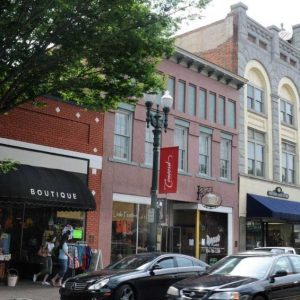
Should Charlotte Look Like Paris or Atlanta?
What should Charlotte look like? When discussing urban design many planners, architects and developers assume that what works in New York, San Francisco and Portland should work here. This assumption ignores the reality that Southerners have a very different perspective on “urbanness” than non-Southerners. No one has asked Charlotteans what they want their city to […]

Investing in North Carolina’s Green Infrastructure
Among the many state programs whose futures hang in the balance as North Carolina’s leadership wrestles with how to close the state’s projected budget shortfall are the four “trust funds” that have served as the primary sources of funding for land conservation over the past few decades. As leaders debate their future, a new report […]

Charlotte’s rapid growth brings demographic changes
Headlines have highlighted multiple demographic trends affecting Charlotte and the metro area over the last decade. “Carolinas lead the nation in Hispanic growth,” read the headline of a Charlotte Observer story in 2008. The city has ranked highly on “Best City” lists for African Americans throughout the 2000s. Moving beyond the headlines, however, is there […]

Charlotte Biotech: Rapid Growth, International Exposure
The emergence of the biotechnology sector was not due to luck, rather it was due to vision, the ability to see the invisible and do the impossible. Our state prepared for success by investing in roads, K-12 education, community colleges, universities, research, innovation, business parks and biotechnology agencies (e.g. BioNetwork, NC Biotechnology Center and the […]
Measuring the Return on Investment
Today’s public libraries are expected to deliver traditional services in a rapidly changing technological environment . As libraries struggle to maintain high quality programs that are financially sustainable, the impact of the recent recession and the consequent decline in financial support further challenges libraries to find ways to survive while continuing to deliver essential services. […]

City-county consolidation: promises made, promises kept?
City-County consolidation, when a county and the cities within a county merge to form a single government entity, is the most visible and comprehensive change in the local government structure. With an average passage rate of fifteen percent, and only forty total consolidations in the US, city-county consolidation is an extremely rare event. Yet, during […]

Charlotte Biotech: A Life Sciences Cluster Emerges
A few weeks ago, UNC Charlotte hosted the ninth annual Charlotte Biotechnology Conference. The original idea for this event was that it serve as a barometer of the “life science cluster” in the Charlotte region. Sensing increased activity in patents and start-ups ten years ago, UNC Charlotte’s Office of Technology Transfer and the regional Small […]

The Surge in Free and Reduced Lunch Applicants in CMS
The new Charlotte Regional Indicators Project website will go live in the next few months. This is the first in a series of articles leading up to that date that will provide analysis of some of the data being tracked by the Indicators Project. Nothing is more heartbreaking than seeing a child go without. During […]

Public Pulse: The Charlotte-Mecklenburg Economy
In its last annual survey* which was conducted in late winter of 2010, the UNC Charlotte Urban Institute included a few questions on a variety of issues currently facing the people of Mecklenburg County. Three of the questions directly touched on the state of the economy in Mecklenburg County. This brief report summarizes the findings […]