Articles About Environment and Planning
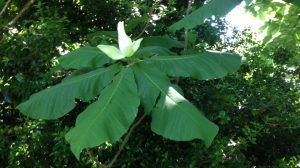
The following is excerpted, with permission, from Margins of a Greater Wildness: Nature Essays on Stanley Creek and Beyond, a collection of essays by Richard Rankin on local topics from the Stanley Creek community in eastern Gaston County, where the Rankin family has lived for many generations. One person is primarily responsible for the rediscovery […]
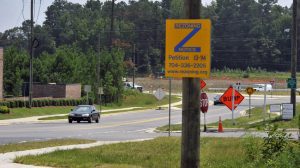
A bill has passed the N.C. House that would do away with a decades-old provision for rezonings, the protest petition, which lets nearby property owners petition for a supermajority vote by a city council or town board on whether to approve the rezoning. In this pro/con package of opinion articles, Dilworth resident Jill Walker discusses […]
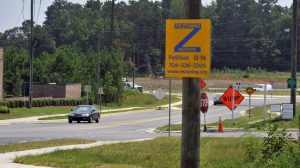
The N.C. House in March passed a bill to do away with the use of protest petitions in rezonings statewide, and neighborhood groups in Charlotte and other fast-growing communities fear they will lose their voice in shaping development. They are mistaken. The majority of rezonings in Charlotte do not generate valid protest petitions from neighboring […]

It is exasperating that, once again, North Carolina homeowners face the prospect of losing the ability to file a protest petition in rezonings. The most recent effort – a bill that has passed the N.C. House – represents the third time in less than three years that our state has been threatened with the loss […]
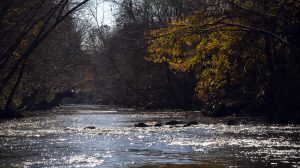
I’ve spent much of the past few months researching Mecklenburg County’s creeks, for a PlanCharlotte.org project called KEEPING WATCH on WATER: City of Creeks. A related gallery exhibit opened March 27 at UNC Charlotte Center City. To see a full list of events, click here, or visit KeepingWatch.org for updates. To whet your appetite for […]
FOR UP-TO-DATE EVENT INFORMATION ABOUT KEEPING WATCH, PLEASE VISIT KEEPINGWATCH.ORG What creek is in your neighborhood? Where did it come from, and where is it going? Why was Charlotte settled amid so many creeks? Are urban streams important? Where does rainwater go? Can we do anything to help with pollution or flooding? Why should we […]

After three years of citizen engagement and the creation of a Regional Growth Framework for the 14-county Charlotte region, the CONNECT Our Future initiative moves into the implementation phase, to assist local governments in their individual efforts to realize the goals and objectives of that framework. One element of the implementation phase is a collaboration […]

I was fortunate to have a completely new and exciting hunting experience recently, going grouse hunting in West Virginia. I’ve not done much upland bird hunting, so it was different from most of my hunting experiences. It was both challenging and exhilarating, and I can’t wait to go again. Grouse live mostly in wooded areas, […]

I have a notepad on my kitchen counter for a running grocery list, and there’s one on my desk devoted to errands and chores. I’ve kept a digital file of all the books I’ve read for more than 20 years. My nature observations are recorded in a hefty, leather-bound journal. Despite an obvious affinity for […]
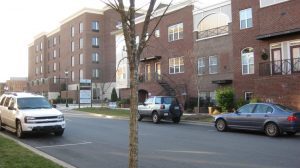
Since the first U.S. zoning laws in the early 20th century, one of their essential principles has been separating uses. Houses, stores, apartments and offices were kept apart from each other. One unintended consequence was more traffic, as people needed to drive from place to place. Another was that, as jobs and work changed, zoning […]
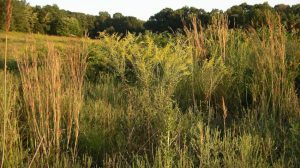
Weaving baskets from natural materials. Gathering wild forest plants to create remedies. Whispering an incantation over a skin burn to take away the pain. Those all might sound like traditions from a forgotten age, but they’re activities that are still alive or were recently practiced in North Carolina’s Uwharrie Mountain region, a recent report says. […]
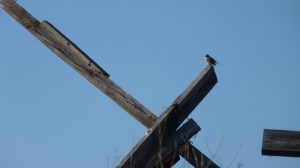
Earlier this month, I had the opportunity to spend a day in the field with two luminaries from the N.C. Museum of Natural Sciences. Ornithologist John Gerwin has studied the special population of black-throated green warblers that breeds on forested peaks in the Uwharries, and he was eager to spend some time in our grasslands. […]