Indicators

One month into the coronavirus crisis, food and housing insecurity rise
Since the coronavirus lockdowns began, Mecklenburg’s resource helpline has seen housing assistance requests jump 219% and food assistance jump 747%. These numbers are an indication of the dramatic impacts we’re seeing unfold on Charlotte-Mecklenburg’s economy. It has been more than one month since Governor Roy Cooper declared a state of emergency to combat the spread […]

Five things coronavirus could change in Charlotte
Closed bars, restaurants and breweries. Hundreds of thousands of employees working from home while trying to home-school children. Near-empty road and no toilet paper on the shelves. The immediate impacts from the coronavirus crisis are highly visible. But the virus could have more long-lasting and farther-reaching impacts beyond the immediate unemployment and economic disruption we’re […]

Everybody counts
Everyone wants to be included and accounted for. This is no different for our homeless population, a group that often feels overlooked and ignored. Charlotte-Mecklenburg is doing their best to remedy this with their annual Point-In-Time Count. The Point-In-Time (PIT) Count is an unduplicated estimate of individuals experiencing homelessness on a single night in January. […]

Chart Charlotte region’s progress toward CONNECT goals
After three years of citizen engagement and the creation of a Regional Growth Framework for the 14-county Charlotte region, the CONNECT Our Future initiative moves into the implementation phase, to assist local governments in their individual efforts to realize the goals and objectives of that framework. One element of the implementation phase is a collaboration […]
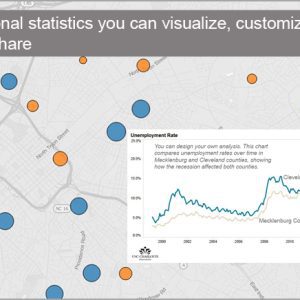
Charlotte Regional Indicators: New look, new function
Our Regional Indicators website now has a new home on the institute’s main website. You’ll find all the data that was on the previous site, but with improved functionality and a new look. Why make the change? We have several reasons. First, the new design will be easier for readers to use and to find […]

Charlotte economic outlook improves for first quarter
The first quarter 2013 Charlotte Business Confidence Index report, released Jan. 2, shows Mecklenburg County business leaders’ optimism about economic prospects in the first quarter 2013 improved compared to their expectations for the fourth quarter 2012. The overall index value of 54.2, an increase of 1.8 points compared to the fourth quarter 2012, represents improved […]

Environmental Quality of Life by the Numbers
The new Charlotte Regional Indicators Project website will go live in the next few months. This is part of a series of articles leading up to that date that will provide analysis of some of the data being tracked by the Indicators Project. How do you paint a picture of the region’s progress on environmental […]

Charlotte Regional Indicators Partners- Coming Soon
The UNC Charlotte Urban Institute is collaborating with community partners to collect and analyze data that will be available through the Institute’s interactive Charlotte Regional Indicators Project website, due out Fall 2010. The resulting databank will build on the Institute’s Charlotte Regional Indicators project to address social, economic, and environmental challenges facing our region. Below […]