A day in the life of a researcher
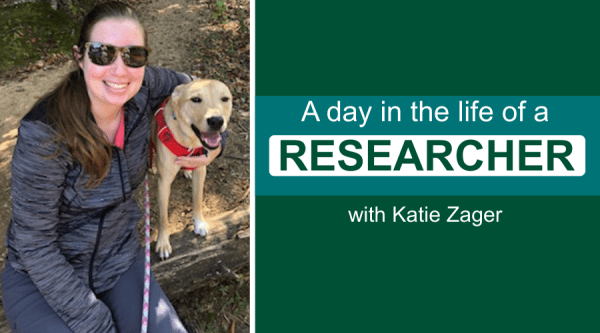
by Katie Zager
If you’ve ever wondered what a day in the life of a researcher, data scientist, data wrangler or research translator was like, this series is for you. Over the next year, you will have the chance to meet a few of the Charlotte Urban Institute staff members right where they are – in life and at work. This series was inspired by the Data Rescue Project’s “Guest Post: A Day in the Life with Federal Government Data” feature. These are our stories. Read about Katie Zager’s day first.
Hi, I’m Katie, a research associate at the Charlotte Urban Institute. For many years, I have worked on the Charlotte-Mecklenburg Quality of Life Explorer–I spend a lot of my time thinking about local data. I also try to use data to inform my daily decision making. While not every decision in life needs to be data driven, I rely on data from the federal, state and municipal governments to both do my work, and keep myself and my family informed and safe.
This article is inspired by the Data Rescue Project, and the article A Day in the Life with Federal Government Data. The data rescue project is an effort to highlight and preserve copies of important government data sets that have been, or are at risk of, being discontinued and/or removed from public access. These data sets have historically been maintained by agencies in the executive branch of government, and are used to provide information, conduct research and inform policy.
6:00 a.m. Time to wake up – My alarm…haha, I haven’t used an alarm in like eight months. I see my daughter stirring on the baby monitor, so it’s time to get up! We enjoy some morning cuddles and playtime.
6:30 a.m. Breakfast time! – While I munch on some fruit and whatever cereal we have in the pantry, my husband and I tag team feeding the baby her morning bottle, some solid food (I call it her morning mash!), and preparing her bottles for the day. Keeping our baby healthy and safe is obviously super important to me. In the U.S, we rely on the United States Department of Agriculture, Food and Drug Administration, and Centers for Disease Control to keep us informed of any recalls or foodborne illness outbreaks. This was something I really paid attention to when I was pregnant, but it’s still important. In practice, I relied on these organizations issuing press releases and working with the media to inform consumers of potential hazards.
8:00 a.m. Daycare drop-off – After a lot more tag-teaming to both get ready for the day, it’s time to head out. First stop, dropping the little one off at daycare. I used the childcare search from Child Care Resources, Inc. to help find a licensed daycare near our home. Child Care Resources, Inc. is a local organization that has many resources for families and providers to advance the provision of quality childcare in the county. They also provide data for the QOL Explorer, helping us visualize proximity to licensed centers. In my neighborhood, 0% of households are within a half-mile of a daycare center. Ours is about a mile away.
9:00 a.m. Arrive to work – After my morning commute, I arrive on campus and greet my co-workers. Since my time as a student here, I have been on or around the UNC Charlotte campus for almost 15 years, and boy, it has grown! Looking at data from one my favorite datasets, the LEHD (via the QOL Explorer), I can see that, as of 2022, the Charlotte campus and surrounding area (which includes commercial/residential space, and a hospital) is home to about 8,000 jobs.
11:00 a.m. Check the status of the next American Community Survey
Many of our projects at the Institute use data provided by the American Community Survey. The ACS is a U.S. Census Bureau Survey that asks a sample of Americans each year more about themselves–where they live, their ages, race/ethnicity, education, earnings, housing situation, commute and much more. The U.S. Census Bureau then aggregates and anonymizes that data and releases it at different geographic levels, such as by block group, city, county, all the way up to the U.S. as a whole. This data serves as the backbone of community research–it helps us understand if programs are occurring in the right place and reaching the right people, it helps us make sure that our surveys are representative of the population as a whole, it helps us understand how communities have changed over time. The ACS is also used by private businesses to open new locations, understand their market, and better serve their customers and surrounding communities.
During the government shutdown last fall, the primary way of accessing ACS data, census.gov, was not working like it should have been. Data was not being updated, and the site was not being maintained – it was buggy, lagged and difficult to access. Instead, we had to find workarounds. One way we accessed the data was through the Census API, which still worked. The Census API allows you to use programming languages like Python or R to request data directly from the Census database. We also used other websites, such as censusreporter.org (which itself uses the Census API) to gather and visualize data from the latest release.
I often get calls or requests from community members asking for help accessing a certain data point from the census. Even when it is working, census.gov isn’t always the easiest to navigate, and I’m always happy to help people find what they are looking for. Having a deep knowledge of the census, and the skills to access it, even when the government doesn’t really want you to, is a valuable resource for the community. We also work with our peers to advocate for continued funding and maintenance for the American Community Survey.
The government shutdown also meant that work was not being done on the 2024 ACS data release. It is usually scheduled to come out at the beginning of December, and is now slated to come at the end of January. Yes, I have ACS Release Day (and all census data release “holidays”) marked on my calendar!
12:00 p.m. Quality of Life Explorer Data Updates
ACS data makes up about a third of the data on the QOL Explorer. The rest comes from local administrative data sources. Today, I am parsing through the Meckelenburg County Tax Parcels to help us create variables related to housing stock and commercial space on the Explorer.
3:00 p.m. Meet with a community partner to scope out a project
Today, we are meeting with a potential community partner to scope out a project, which includes understanding what their research needs and questions are, and how we would work to answer those questions. As part of the team, I like to understand what data our partner might need, both to provide the necessary context for the research (this data is often from the ACS!), as well as specific existing datasets that could help us answer the research questions, and then help figure out what additional data we would either need to collect or have them provide. There are many aspects of scoping out a project, this is one that I just particularly enjoy.
6:00 p.m. – Take the dog (and the baby) for a walk
After work, I head home and take the dog and baby out for a quick 20-minute walk while my husband cooks dinner. I am lucky that our street has sidewalks, trees and is relatively well-connected to surrounding neighborhoods.
One thing I am really passionate about is pedestrian and bike safety, and making sure we have neighborhoods and streets that are beneficial for all users. I am part of my town’s Vision Zero committee, which aims to bring deaths for all road users down to zero. Charlotte also has a Vision Zero plan, and uses local data, such as the High Injury Network map to target safety interventions.
When I was younger, I would ride my bike everywhere. Once my husband and I got a dog, and especially now with a baby, my car-free time, both just walking around the neighborhood, and to town, is usually done on foot. Trying to handle both a stroller and the dog at the same time really drives home for me how important it is to have wide clear sidewalks, ramps, and clear paths for folks to navigate. These are the same types of features that also make it possible for those with disabilities, as well as elders, to navigate our streets and sidewalks.
Being out in the neighborhood gives me an appreciation for the work we at the Institute, and so many others, from the local department of transportation, all the way up through the federal government, do to collect and use data that can help keep families and communities safe and thriving.
I hope you enjoyed spending the day with me!