Faculty Spotlight: Adreonna Bennett
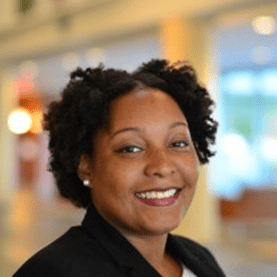
Adreonna Bennett is the Community Engagement Librarian/Archivist, Special Collections & University Archives at UNC Charlotte’s J. Murrey Atkins Library in special collections and university archives. She initiates and leads collaborations with individuals, families, and organizations in the greater Charlotte region to preserve and share their history.
In this conversation, Adreonna shares how she found her path into community-engaged archival work, what meaningful collaboration looks like in practice, and why preserving lived experience requires both patience and presence.
Q: What exactly is a community engagement librarian, and how did you get started on your career path?
A: As community engagement librarian/archivist, I work in the special collections unit to connect the local Charlotte community with the archives and sometimes the library as a whole. I started my career in Durham, North Carolina working at a branch of the public library while in graduate school at North Carolina Central University. During this time, my interests pivoted towards archives and I was able to land an internship at UNC’s Wilson Library curating an exhibit focused on 400 years of African American mobility experience. Both of these opportunities, while completely different, sparked a desire to not only preserve history but also share it out to inspire others.
Q: Tell us about one of your current community-engaged projects.
A: Over the past year, I collaborated with Dr. Julia Moore and the Charlotte Presbytery to document and archive local Presbyterian church histories, particularly those connected to the Catawba Presbytery. Supported by a generous subaward from University of California, Irvine, C-CAP TEACH Community-Centered Archives Practice: Transforming, Education, Archives, and Community History which was funded through the Mellon Foundation. We organized a series of workshops focused on community archiving practices, oral history methodology, and genealogical research. In addition, we hosted heritage harvest events at participating churches, providing congregants with no-cost digitization of personal and institutional materials. I am especially grateful to First United Presbyterian Church, Grier Heights Presbyterian Church, and Charlotte Museum of History for generously providing space for these events, to Danielle Pritchett of the Carolina Room for leading a genealogy workshop, and to Dr. Monika Rhue for facilitating a session on community archiving practices..
Q: How do you establish your relationships with your community partners?
A: Most of the relationships I’ve built have formed organically. Through simple, genuine interactions. It might start with meeting another faculty member on campus and chatting about potential collaborations, or connecting with others at events beyond the university. Being present and engaged in community spaces naturally opens doors. The idea of six degrees of separation often feels very real; you never truly know how far your network extends or how interconnected your circle may be.
Q: In what ways does your work intersect with faculty research or teaching?
A: Most commonly, that happens through digital humanities initiatives and neighborhood-based projects. Faculty frequently collaborate with us to explore communities from a historical perspective, drawing on our manuscript collections and oral histories. They also bring their students into the archives, creating opportunities to engage directly with primary source materials and deepen their understanding through hands-on research.
Q: What’s one thing you’d like faculty and staff to understand about your work?
A: I want them to understand that it’s slow but intentional work. Creating and maintaining relationships takes a long time. Projects could be discussed now but won’t actually get off the ground for another year or so. When you are working with people’s memories and lived experiences you have to be prepared to go at their pace, not the rate in which you want to finish the project.