State of Our Data: How many people are part of the Data Trust?

By Candace Edwards and Sydney Idzikowski
Ever wonder if you’re represented in the Charlotte Regional Data Trust?
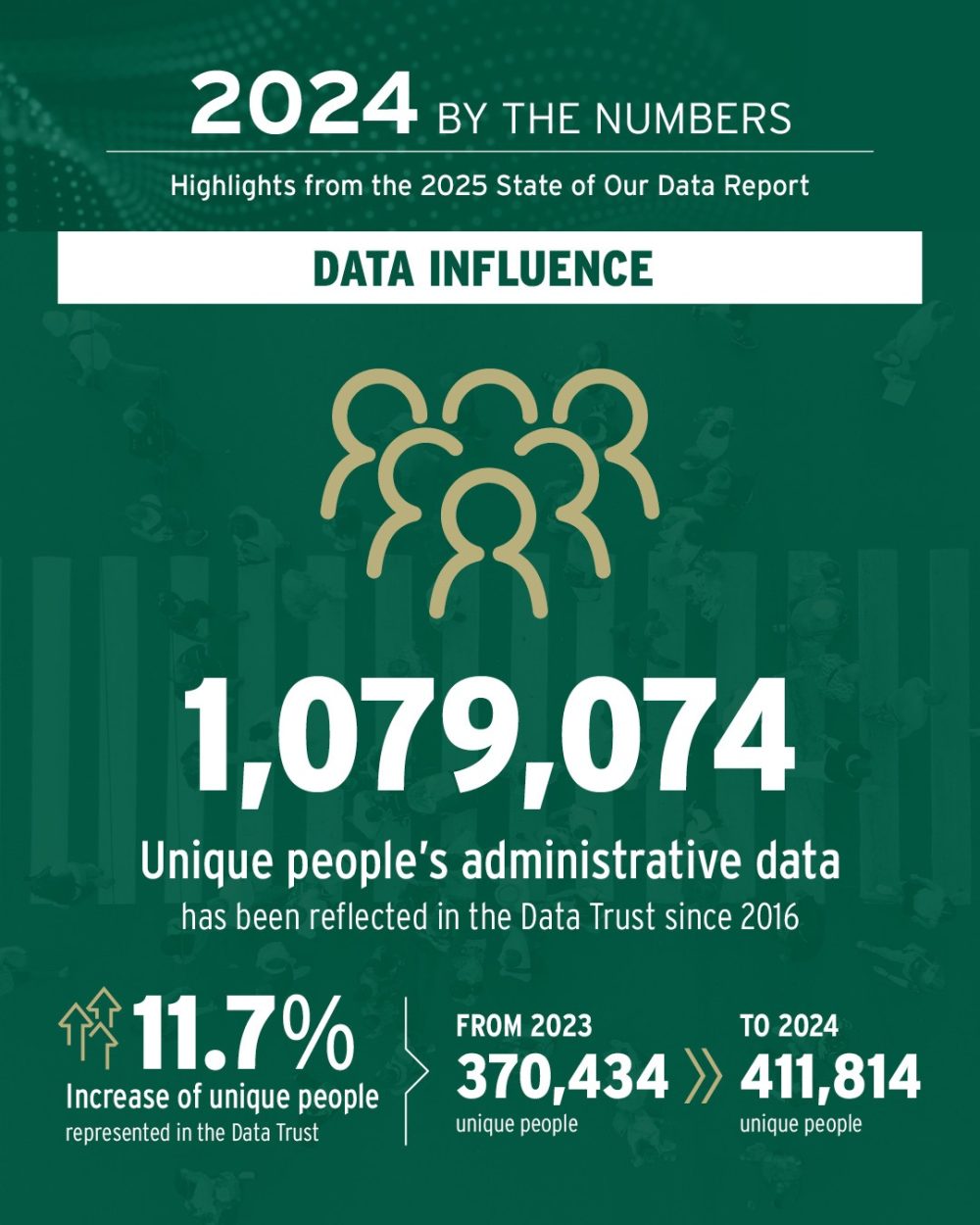
Since 2016, more than a million Mecklenburg County residents (1,079,074) have been part of the Data Trust. And that’s because our data are people.
How the Data Trust works
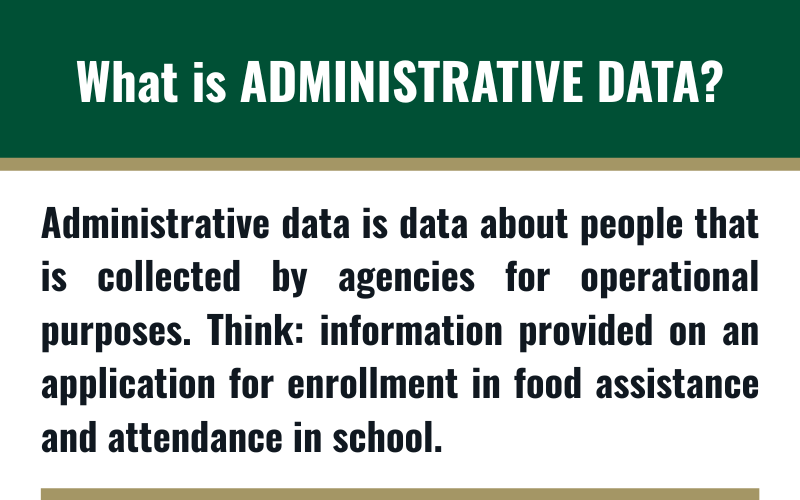
The Data Trust brings together data that typically exist in separate organizations to help us understand the complex needs and possible solutions to quality of life-related matters in our region. We do this through data-sharing partnerships with local organizations, including governments and nonprofits. We link together administrative data from these partners to gain a more comprehensive understanding of our experiences and outcomes.
[Read more about how we’ve used linked administrative data to answer important community questions about homelessness and health]
The 2025 State of Our Data: A representative snapshot
Last December, we released the 2025 State of Our Data report which shows who is represented in administrative data from 16 data partner datasets. These datasets cover a range of quality-of-life domains from housing and education to economy and workforce, safety and justice, and more.
In 2024, there were 411,814 unique people represented in the Data Trust. If that number reflected the population of a city, it would be the THIRD LARGEST in North Carolina.
Understanding the numbers
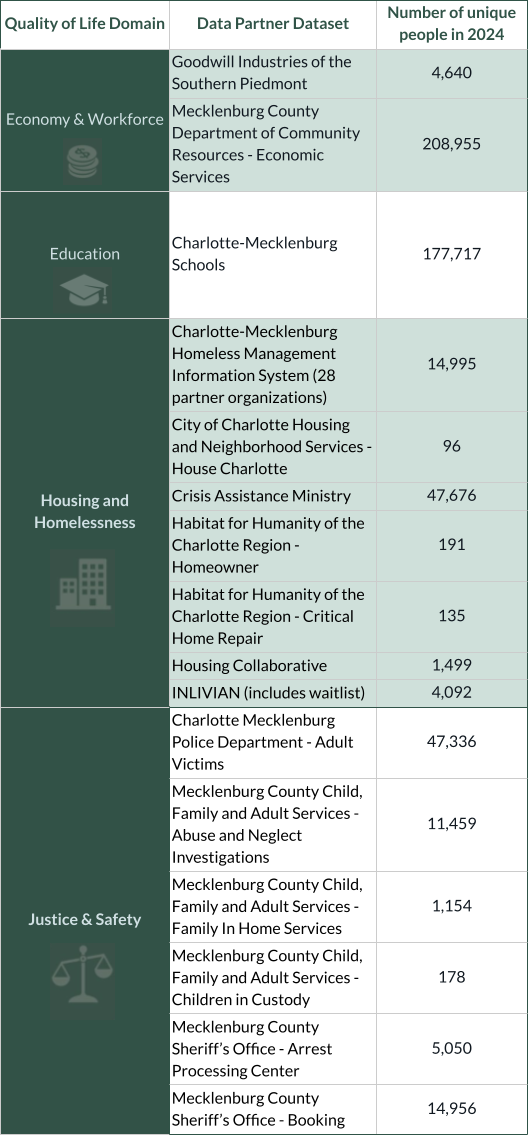
In the chart on the right, we illustrate how the total number breaks down in specific datasets.
Why this matters
Data Partners help us unlock what’s possible and determine the types of complex questions and solutions we can uncover with available data. Our current partners allow us to examine whether young adults who age out of foster care experience homelessness and stay enrolled in food supports like the Supplemental Nutrition Assistance Program or SNAP. We can also examine how attending a multilingual preschool program impacts educational success in elementary school and beyond.
And having a wide range of data partners allows us to link data across multiple domains and understand different elements related to quality of life. We can look at how people who have been booked into jail and released interact with workforce services at Goodwill Industries and whether they are successful in finding a job. It’s also important to have robust coverage within each quality of life domain. For example, our current data partners largely represent the housing and homelessness domain, and data from these partners highlight different stages of the continuum of homelessness to stable housing. This means we can track someone’s journey from housing instability to homeownership.
Our data are always deidentified for use
The insights possible through integrated administrative data are gained using deidentified data. Our data governance model requires that any information that could identify a person (name, address, birthdate, for example) be removed from datasets before they are used for any purpose and all proposed uses must be reviewed and approved by a board committee of data partner representatives. You may be in the Data Trust, but your information is carefully protected.
The future of regional insights
With more data partners trusting us to hold data, and more unique people in the region using their services, we have the potential for much greater coverage of Mecklenburg County and the Charlotte region. Thus, strengthening findings and their application to decision-making.
Connect with the Data Trust
Interested in learning more about the Data Trust or how your organization can participate? We recruit data partners all year long. See the data we have available here. Or email us at datatrust@charlotte.edu to learn more.