Articles

By Liz Morrell
Housing affordability has become one of the defining challenges facing cities across the United States, and Charlotte is no exception. As housing prices continue to rise faster than wages, more residents across the income spectrum are struggling to find stable, affordable places to live.
This is the first article from a series of briefs that will help provide a clearer understanding of how Charlotte’s affordable housing investments shape housing stability, neighborhood conditions and economic opportunity across […]

By Candace Edwards and Sydney Idzikowski
Ever wonder if you’re represented in the Charlotte Regional Data Trust?
Since 2016, more than a million Mecklenburg County residents (1,079,074) have been part of the Data Trust. And that’s because our data are people […]

By Bianca Bagley
The Charlotte region continues to grow. It seems like everywhere you turn there are new housing developments, shopping centers and schools being built to support our population. Data from the 2025 census illustrates this phenomenon. The Queen City is becoming an increasingly popular destination for domestic and international migrants alike with Charlotte being named one of the top five metropolitan areas for growth between July 2024 and July 2025.
In fact, between 2020 and 2025, the 14-county Charlotte metropolitan region that includes Anson, Cabarrus, Catawba, Chester, Cleveland, Gaston, Iredell, Lancaster, Mecklenburg, Lincoln, Rowan, Stanly, Union, and York counties in North and South Carolina added 289,331 residents […]
By Fatima Rodriguez Caba
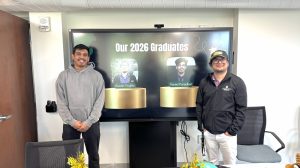
It’s commencement season again at UNC Charlotte, and here at the Urban Institute, we couldn’t be more excited! Commencement is a wonderful time not only for our campus but also for our city. As sounds of excitement and joy fill the air, we want to take a moment to celebrate two recent graduates whose work with the Institute – and time at the University – culminated in hard-earned, well-deserved achievement.
Special congratulations are in order for graduate research assistants, Austin Trujillo and Varad Paradkar, who joined the latest class of Niner alumni on Saturday, May 9, 2026!
By Mia Gaddy and Liz Morrell
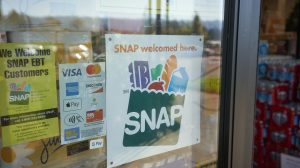
Food insecurity is not always obvious.
It occurs when someone is experiencing limited or inadequate access to safe, nutritious and culturally appropriate food due to social or economic constraints. 18 million people in the United States are experiencing food insecurity, and of that 18 million, 6.8 million face both food insecurity and hunger.
Food insecurity impacts thousands of residents in Mecklenburg County. While the region continues to grow, gaps in access persist […]

By Asha Ellison
Though gun violence in Fayetteville is still often discussed in headlines and is subject to public debate, a closer look at the data tells a more nuanced story. In 2024, the City of Fayetteville commissioned the UNC Charlotte Urban Institute to further assess gun violence across the city.
Using a mixed-methods approach, the Institute analyzed crime data, community focus groups in ShotSpotter neighborhoods, and cost estimates to better understand both the reality of violence and how it is perceived across the city […]

By Annalise Tolley
Many of us have been here: Enjoying our spring, taking in the beautiful blue skies–pleasantly surprised that our Benadryl has kept the pollen symptoms at bay–when we see it. There in the garden, getting cozy with the things we actually planted, sprouting tall in defiance, are those pesky weeds. As we enter the woodshed to prepare for our faceoff, we have two options: Use the weed wacker or use the weeding fork
The weed wacker is an enticing option. It solves the eye sore problem without nearly as much effort, though the satisfaction may be short-lived. Weeds tend to quickly pop up again in the same spot. On the other hand, the weeding fork extracts the weed at its roots. We’ll have to get our hands dirty and it’ll take all afternoon, but at least it won’t pop up again in the same spot. Not to mention, removing […]

By Rachel George, Ph.D., Sydney Idzikowski, Carlene Mayfield, Ph.D., and Pooja Palmer
The Charlotte Regional Data Trust brings together data that typically exist in silos to better understand the complicated issues our communities face.
For instance, when you go to the doctor, information is collected and stored about you and your needs. But, the doctor is not the only entity that impacts your health; your housing environment and food supports also play a role, and information about these other elements of your life exist in separate systems. By combining information, a more comprehensive understanding of health can be obtained to inform effective decision-making about your care and desired outcomes […]
By Mae Israel
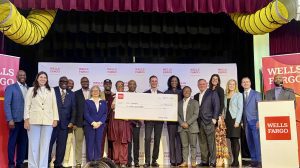
A major corporate donation has pushed the Three Sisters Market closer to a groundbreaking and opening date. The market, an effort long-championed by west Charlotte leaders and supported by Johnson C. Smith University and UNC Charlotte, will be the first grocery store in Charlotte’s West Boulevard corridor in nearly 40 years – and the first cooperative market in the city.
Wells Fargo, among the largest banking institutions in the city, announced Tuesday, April 7, 2026, a $1.5 million grant to the West Boulevard Neighborhood Coalition. The coalition, which is building the market, hopes to begin construction by the end of the year […]

By Mia Gaddy and Mecca Howe, Ph.D.
Federal administrative changes in 2025 led to funding cuts for nonprofit organizations, also known as NPOs. NPOs often rely on federal funding to support programming, either directly or through funding that passes through state and local governments. The Charlotte Urban Institute partnered with the Foundation for the Carolinas […]

By Angelique Gaines and Asha Ellison
Preferred news and information sources vary by geographic location. How people access news and information–and who they trust to relay it–are important to establishing a healthy and informed community. But how do we ensure that communities and the people who live within them are engaged with the news and […]

Toye Watson ‘05 B.A., ‘21 M.Ed was recently named director of community and strategic partnerships for the UNC Charlotte Urban Institute, a unit within the Division of Academic Affairs. In this role, Watson will cultivate and sustain relationships with community organizations for mutually beneficial community-university engagement, connecting the Institute and University’s assets and deep subject […]