Publications and Reports

Examining housing needs at Brookhill Village in the event of redevelopment
In 2020, Lookout Housing Ventures proposed a redevelopment plan for Brookhill Village, a 36-acre naturally occurring affordable housing development near the intersection of Remount Road and South Boulevard. Although the proposed development has not moved forward, the approximately 120 households of Brookhill Village may be at risk of displacement if Brookhill Village were to be […]

An ‘economic halo’ for rural churches in North Carolina
In small towns across North Carolina, churches function as more than places of fellowship and gathering for people — they’re also de facto economic engines. [Read the full report: ‘The Economic Halo Effect’] That’s one of the key findings of a new research report by the UNC Charlotte Urban Institute, in partnership with The Duke […]

How are Housing Choice Vouchers distributed across Southeastern Cities?
This research was used by USA Today for an investigative series called ‘Segregated by Section 8.’ The series is available online here (subscriber-only). Housing Choice Vouchers are a subsidy that helps extremely low income individuals and families (defined by HUD as earning less than 30% of area median income) afford housing in the private market. […]

How can we measure the developmental impacts of the COVID-19 pandemic on young children?
Across the United States and around the world, children and families are starting a new school year. Typically a time of excitement and new beginnings, the first day of school has again been overshadowed by the COVID-19 pandemic. We’ve learned a lot about the virus over the past 18 months. However, the ways in which […]

Supporting Charlotte’s minority-owned small businesses
A study released this week by the UNC Charlotte Urban Institute sheds light on the unique challenges minority-owned small businesses face and how the Charlotte-Mecklenburg community can better support these enterprises, which are key to community well-being and wealth-building. Defined as businesses with fewer than 500 employees, small businesses comprise 99.9% of all businesses. Small […]

Poverty suburbanization and job access: A new study tests ‘spatial mismatch’
Does where you live — and what jobs you have access to — influence whether you work, and how much you earn? The long-held “spatial mismatch” theory posits that inner city unemployment and poverty has been driven in large part by the increasing physical separation of inner city residents from job opportunities, as suburbs boomed […]

Introducing ‘Future Charlotte,’ a podcast about our city’s growth
Charlotte is a city with growth embedded in its DNA, a community where striving to be “world-class” has both propelled us forward and papered over many disparities just beneath the surface. And Charlotte’s growth shows no signs of slowing down. With a host of plans coming together in 2021 that will set the city’s path […]
New report release: Single adult homelessness integrated data
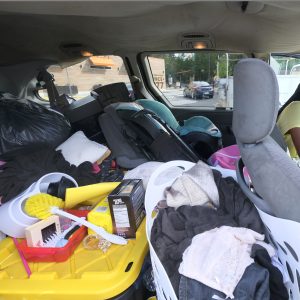
Mecklenburg County Community Support Services recently released the Single Adult Homelessness Integrated Data (SAHID) Report. This is the first community report focused specifically on single adult homelessness. The report is part of the Charlotte-Mecklenburg Housing Instability & Homelessness Report Series, which is funded by Mecklenburg County Community Support Services and completed by the UNC Charlotte […]

Trust in neighbors and police: Who has it and what does it mean for Charlotte?
This article was written by the UNC Charlotte Urban Institute. Data used in this series was collected in partnership with Leading on Opportunity, Opportunity Insights, Communities in Schools, YMCA of Greater Charlotte, Foundation For The Carolinas, and SHARE Charlotte, with staff funding from The Gambrell Foundation. See more results from the 2019 Mecklenburg Social Capital […]

Housing First works: Report sheds light on program to end homelessness
In the shadow of COVID-19, it’s easy to lose sight of the strides Charlotte-Mecklenburg has made to address chronic homelessness. Housing First Charlotte-Mecklenburg (HFCM) was launched in 2015 to end chronic homelessness in Charlotte-Mecklenburg by scaling housing first, particularly by expanding the housing first permanent supportive housing model. Through HFCM and the continued work of […]