Annual Regional Well-Being Survey
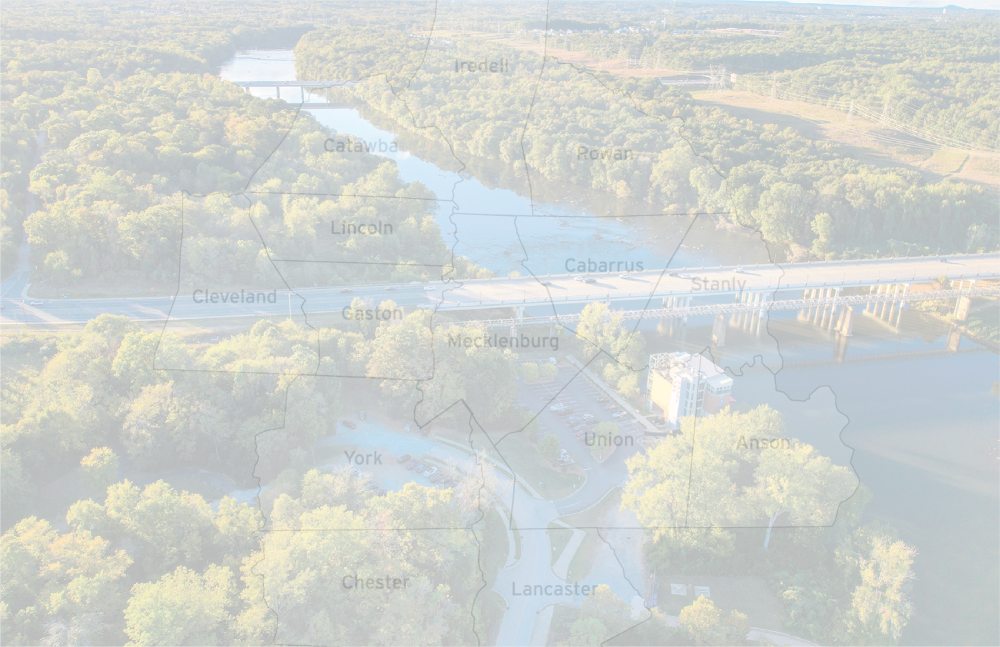
Through an annual survey of residents across our 14-county region, Your Voice Carolinas documents how people describe their lived experiences, creating trusted data that can inform research, journalism, philanthropy, and public decision-making.
The Need
The Charlotte region is often recognized for its growth and economic strength. Yet we do not have comprehensive, region-wide information about how residents perceive their own quality of life. Concerns about economic stability, safety, and opportunity can shape how people experience their communities — sometimes in ways that differ from traditional data and performance metrics.
Your Voice Carolinas provides that missing layer, elevating resident experience from anecdote to evidence to strengthen journalism, policymaking, philanthropy, and community dialogue. Designed as a comprehensive, recurring assessment of regional wellbeing, the Your Voice Carolinas survey is developed in partnership with leading researchers and reviewed by UNC Charlotte faculty, the survey applies rigorous methodology to capture resident perspectives at scale.
By combining structured survey design with regional representation, this annual initiative ensures that results reflect diverse communities across the Charlotte region, creating a consistent benchmark for understanding how residents experience change over time.
Measuring Regional Wellbeing
The survey is designed to capture both individual wellbeing and broader community perceptions. It includes questions related to:
- Personal life satisfaction and fulfillment
- Feelings of inclusion and belonging
- Economic stability and financial security
- Housing access and stability
- Public safety and sense of security
- Key issues affecting local communities
By examining these areas together, the survey creates a comprehensive assessment of how residents experience life across the region.

Survey Methodology
Who Can Participate
The survey population includes residents aged 18 and older across the Institute’s 14-county region.
Participants are selected through a research vendor using a combination of online and phone-based sampling methods to ensure broad regional representation. Invitations are distributed through established survey panels and randomized phone outreach.
What to Expect
The survey includes questions about personal wellbeing, community conditions, and regional priorities.
Most core questions will remain consistent year to year to allow for trend analysis, while a small number of questions may rotate annually to reflect current issues affecting the region.
Confidentiality
All responses are confidential. No identifying information is collected or stored, and findings are reported only in aggregate form.
Research Approach and Regional Impact
Your Voice Carolinas is designed as an annual survey, creating a longitudinal dataset that tracks how resident perceptions evolve over time. This consistency allows the region to identify trends, monitor shifts in wellbeing, and better understand shared challenges and opportunities.
Data will be aggregated and analyzed to produce region-wide findings, with additional insights available through future reporting and analysis. As the dataset grows, it will strengthen the region’s capacity for informed, evidence-based decision-making.
Data partners and sponsors include:
- Charlotte Urban Institute
- Happiness Research Institute
- UNC Charlotte faculty
- The Gambrell Foundation
Survey results will inform regional reporting, support journalists and civic leaders, and contribute to research and community dialogue. By creating a consistent, annual benchmark of resident wellbeing, the survey provides a trusted source of regional insight over time.
The inaugural Regional Wellbeing Survey was launched February 2026. Data collection will take place over several weeks, with findings released publicly in spring 2026.
Beginning in 2027, the survey will be administered annually, creating a consistent benchmark for tracking wellbeing across the Charlotte region over time.
FAQS
What is Your Voice Carolinas?
Your Voice Carolinas is a survey center housed at the UNC Charlotte Urban Institute. Surveys can help us understand individual perspectives and experiences for a large portion of the population. Survey data can also be combined with other types of data (administrative data, Census data, qualitative data, etc.) to help us understand quality of life and its nuances across our 14-county region. In April 2026, Your Voice Carolinas launched an annual survey to assess Charlotte regional residents’ perspectives on their personal well-being and the well-being of their communities (Regional Well-being Survey).
Why is the Institute using a survey to understand regional wellbeing and quality of
life?
The concept of “quality of life” has not been measured extensively in the United States. When it has, it has been studied at the state or national, rather than the regional level. By partnering with the Happiness Research Institute, we are creating a more well-rounded and effective measure of regional quality of life than anything that currently exists in our region. Even better, our methods allow us to examine differences in quality of life across all 14 counties in the Charlotte region.
Survey data are one type of data we collect to tell the story of our communities and region. It is important to understand multiple types of data to understand an issue or opportunity :
● Data on public perceptions and opinion,
● Data describing the extent and characteristics of an issue,
● Data detailing people’s experience of an issue, and
● Data on the historical and policy context of an issue
How is it different from other data tools we already have in our community?
Most of our region’s current data from sources like the Charlotte-Mecklenburg Quality of Life Explorer, Charlotte Regional Business Alliance, or Centralina Regional Council describe the extent and characteristics of issues. These resources typically don’t include representative public perception data, yet research connects how people perceive themselves and their communities to the way they spend and invest their money and their time, the way they engage with their communities, and their objective health.
Static measures, such as counting jobs, income, and GDP, are important sources of information for our region, but fail to capture quality of life and subjective well-being effectively, as noted in sources ranging from the Organisation for Economic Co-operation and Development (OECD) and to the Brookings Institute. As the Stiglitz–Sen–Fitoussi Commission concluded, wellbeing is best captured by asking people themselves. Asking a representative sample of residents to complete validated measures related to subjective well-being, social capital, and financial resilience provides the UNC Charlotte Urban Institute with a unique framework to assess this concept in a way that none of our current regional data sources can.
Who will be invited and how are participants selected?
The survey population includes all residents of the Institute’s 14-county region who are at least 18 years of age. In partnership with our selected vendor, the Institute has access to two commercial panels (lists), one which consists of individuals within the region who have provided their email addresses to take online surveys, and one which consists of a list of phone numbers, also of individuals within the region, (cellphone and landline) that will be used to randomly select participants.
Will responses be confidential?
Yes, survey responses are confidential. There will be no identifying information collected or stored from survey participants.
What types of questions will be asked?
The Regional Wellbeing Survey asks questions across various dimensions pertaining to quality of life, including life satisfaction, sense of belonging, trust, financial outlook, food (in)security, safety, environmental issues, housing and policy priorities for the Charlotte region. We also include a set of demographic questions.
What will be done with the survey results?
For 2026, survey results will be shared independently with the public and will be released at our inaugural State of the Region event on October 7, 2026 at 3:00 pm at the Dubois Center and UNC Charlotte Center City.
Starting in 2027, the survey results will be released alongside longitudinal metrics from the Carolinas Regional Explorer and a synthesis of relevant research conducted across the region over the past year. Together, these elements will inform an annual assessment and accompanying research agenda, planned for annual release based on updated data each year.We are excited that, informed by the survey, the annual assessment and agenda will provide data that will guide us in proactively tackling the most salient quality of life issues facing our region.
What additional engagement efforts will the institute participate in to ensure that a broad representation of regional voices are included?
We will conduct targeted outreach to stakeholders across the 14-county region in partnership with the Centralina Regional Council and Foundation For The Carolinas, and other partners with a regional footprint. At these gatherings, we will discuss not only the survey, but also our additional regional engagement efforts, which include the Carolinas Regional Explorer and exploratory needs assessment with nonprofits, community groups, and government entities.
Will the survey change each year?
Most of the questions will not change to allow the Institute research team to examine changes and trends over time.However, a selection of questions will change each year to correspond to the current social environment and topics that are relevant to the region’s residents.
Who is partnering in the Regional Well-Being Survey and how can I support it?
The Regional Wellbeing Survey is sponsored in part by The Gambrell Foundation and has been developed in partnership with the Happiness Research Institute in Denmark, premier researchers in the science of wellbeing, as well as faculty contributors and reviewers in the UNC Charlotte College of Humanities & Earth and Social Sciences. If you or your organization are interested in supporting the survey or the larger State of the Region initiative, please contact Lori Thomas. If you are interested in inviting an Institute staff member to talk about the findings, please contact Liz Morrell.
I have an idea for a question I’d like to add. What is the best way to notify the institute about my idea?
We always take suggestions on how to improve our surveys and even if we can’t include your question on this survey, Your Voice Carolinas administers a variety of surveys throughout the year and we are always happy to discuss new ideas.Please email Eric Moore, senior research associate, for more information.
What is a survey?
A survey is a tool that researchers use to measure the attitudes and beliefs of a population of interest (in this case, the Institute’s 14-county region) by collecting responses from a sample of individuals that represent this larger group.
Is this the same thing as a poll?
A “survey” and “poll” are similar in the sense that they both try to understand people’s opinions or experiences about a particular topic. The distinction comes from the intent behind the method.
Polls are typically focused on a specific public policy issue, with the intention of informing a wide audience about public opinion. Polls, such as those conducted during election campaigns, are administered repeatedly over shorter periods and focus on descriptive analyses.
With our survey, on the other hand, we are interested in understanding a more general concept of well-being and is framed around the various dimensions of quality of life as defined on our Charlotte-Mecklenburg and Carolinas Regional Explorer tools. The survey will be administered annually, and the Institute will conduct various descriptive and inferential analyses to generate a more nuanced understanding of well-being and quality of life across the region.
What potential biases exist and how are they mitigated?
There are numerous types of bias that can occur when conducting any survey, including sampling, non-response, and measurement biases.
Sampling bias occurs when the sample selected for the study is not representative of the larger population of interest. For example, a study of Mecklenburg County residents in which 80% of the sample reported household income of $150,000 or more per year would exhibit sampling bias, given that the county’s median household income is just under $85,000 per year. These survey findings would not be generalizable to Mecklenburg County residents as a whole.
Non-response bias occurs when individuals who respond to a survey differ fundamentally from those who do not. This type of bias typically occurs when a particular subgroup fails to respond to a survey and was a commonly discussed phenomenon after the 2016 presidential contest, when pollsters found (some) evidence that Republican-leaning voters were more likely to stop participating in polls than other members of the electorate. The resulting polls suffered from non-response bias, as they overestimated the likelihood that the Democratic candidate would win.
Measurement bias occurs when the wording of a survey skews results. This can stem from leading questions, loaded or emotional language, ambiguous or unclear wording, complex or double-barreled questions, or question ordering. In 2003, the Pew Research Center asked respondents whether they “favor[ed] or oppose[ed] taking military action in Iraq to end Saddam Hussein’s rule”. Sixty-eight percent favored military action, while 25% opposed it. When Pew added “even if it meant that U.S. forces might suffer thousands of casualties” to the end of this question, support dropped to only 43%, while 48% claimed to oppose it.
While it is impossible to eliminate all forms of bias resulting from a survey, the Institute is committed to ensuring our regional survey represents the viewpoints and experiences of our entire 14-county region by adhering to the following standards:
- Utilizing a large sample size (N=4000) in order to increase the chances of residents being included (thus making it more likely that the sample will reflect the population as a whole).
- Employing weighting techniques to correct for any bias that could still occur despite the large sample size.
- Using both online and phone sampling to reach groups that are more likely to respond to either modality.
- Engaging with well-established survey practices, ensuring that questions and the survey design are both valid and reliable.
The Charlotte Urban Institute is committed to ensuring that a broad representation of voices are heard in the Regional Wellbeing Survey. Thus, we are investing significant resources in the process to ensure that demographic groups that are typically less likely to respond to surveys participate.