Data Articles

by Sydney Idzikowski
We are excited to release the third annual State of Our Data report! The report provides the Charlotte Regional Data Trust Board of Directors, as well as our communities, partners and stakeholders with an annual update and summary of our community data ecosystem. The report helps to tell the story of the Data Trust by documenting the data we hold in trust, who is represented in the data, how people are linked across the organizations that serve them and how the data has been used for impact.
by Sydney Idzikowski
The Charlotte Regional Data Trust is an integrated data system where people can make requests of its data for research, evaluation or planning purposes. The Data Trust holds data that represent the Institute’s quality of life domains such as housing and homelessness, education, and safety and justice. Learn more about the projects and requests people have submitted for Data Trust data so far in […]
By Sydney Idzikowski
We are pleased to release the second annual State of Our Data report! The report provides the Charlotte Regional Data Trust Board of Directors, as well as our communities, partners and stakeholders with an annual update and summary of our community data ecosystem. The report also dives into the data we hold in trust and why it matters, and the work we do at the Charlotte Urban Institute and Regional Data Trust […]

By Sydney Idzikowski
The Charlotte Regional Data Trust (Data Trust) is an integrated data system where people can make requests of its data for research, evaluation or planning purposes.
The uses of data must be for public good and all requests for data are reviewed by our Data and Research Oversight Committee. Here. you will find requests people have submitted for Data Trust data so far in 2025 […]
By Liz Morrell, Ph.D.
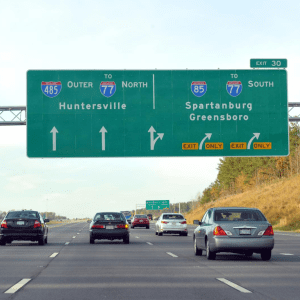
Transportation, whether on foot, bus, train, or car is a lens that magnifies larger societal dynamics. On the one hand, it’s one of those near-universal experiences that unites us; yet, as with housing, education, and health, we experience it differently depending on who we are. Conflicts arise when our individual subjectivities clash with each other, rather than co-incorporate.
In Charlotte, 3.7% of households lack reliable access to a personal vehicle. This is well below the national average of 8.6%. That statistic underscores what many know – ours is a car-dependent city. Ridership has fallen for both bus and light rail in recent years and, for many, public transportation is a curiosity or last resort, rather than a vital civic amenity.
There are two challenges with this […]

By Katie Zager
Last December, the UNC Charlotte Urban Institute, along with the Lake Norman Economic Development Corporation, released the 2023 North Mecklenburg Housing Needs Assessment. This was an update to a report the institute previously released in 2019.
The assessment included information for the three towns that make up northern Mecklenburg County (North Mecklenburg); Cornelius, Davidson, and Huntersville. Here’s what we found […]

By Katie Zager
New data from the American Community Survey(ACS) shows that poverty rates have decreased in Charlotte and surrounding areas. Among the 14 counties in the region, eight (60%) saw a statistically significant decrease in poverty. The region performed better than the nation as a whole, where about 36% of counties had a significant change in poverty rates […]
By Kailas Venkitasubramanian, Ph.D.
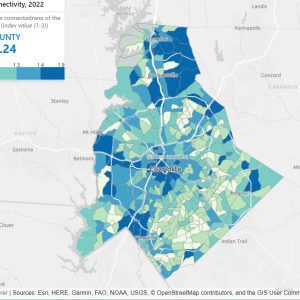
How can we understand Charlotte’s urban growth more holistically? With the Charlotte-Mecklenburg Quality of Life Explorer, of course.

Despite higher housing costs, more adults in Mecklenburg County are living on their own. Over the past eight years, Mecklenburg County has seen a decrease in the number of adults living with non-relatives (presumably roommates), and an increase of adults living alone, or with their own children. Fewer adults are doubling-up. In 2022, about one […]
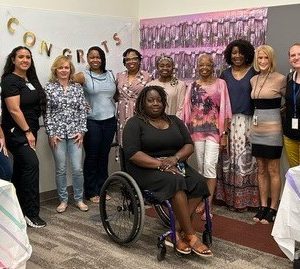
Data are an important part of the Charlotte-Mecklenburg ecosystem. When decisions hang in the balance regarding funding, policies, or programs, data can tip the scales. Conversations about data are frequently dominated by data scientists, professional service providers, executive administrators, and university researchers. But what of the people whom the data represent? Where are their voices […]
As a community, we often talk about the young people who are the “most vulnerable” or who are at “high risk.” Admittedly, we don’t always know who exactly those young people are and what their experiences have been. And far too often, those labels become the only story we associate with them. We don’t always […]

(This article has been reposted with permission from the Building Bridges Blog. To see original article, visit http://mecklenburghousingdata.org/) Last year my family found itself in a difficult situation. As we approached the end of our lease, our landlord notified us that our rent would increase $150 per month if we renewed. We had two options: […]
By Katie Zager
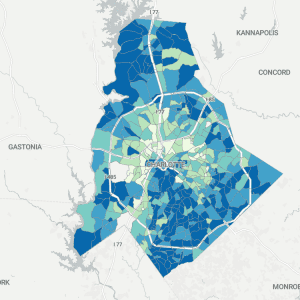
The Quality of Life Explorer — Charlotte-Mecklenburg’s source for more than 80 interactively mapped variables about the economy, environment, demographics and more — has been updated with new information allowing you to explore our community […]

When it comes to the creative scene, Charlotte isn’t often mentioned in the same breath with peer cities like Austin or Nashville. After all, the city’s unofficial tagline is “Banktown,” not something like “Music City” or “Keep Austin Weird.” But Charlotte has a thriving creative community. And a new survey by the UNC Charlotte Urban […]

Violence impacts all of Charlotte-Mecklenburg, but the toll doesn’t fall equally across members of our community. There are pronounced disparities along racial lines. A new, data-focused learning community will help local leaders across sectors find collaborative solutions to prevent and address violence in Charlotte and Mecklenburg County. Housed at the University of Pennsylvania, Actionable Intelligence […]

Your access to medicine, lifesaving COVID-19 vaccines and other pharmacy services might depend on what part of town you live in. The Urban Institute recently updated the Quality of Life Explorer data maps to include several new metrics, one of which is particularly relevant as we enter year three of the global pandemic. “Proximity to […]
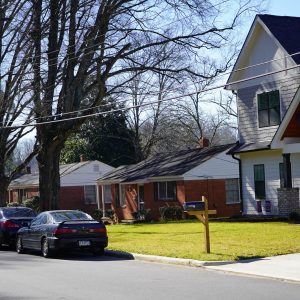
We often paint Charlotte’s housing market in broad strokes: rising prices, bidding wars and gentrification reshaping neighborhoods. Updated data on the Charlotte/Mecklenburg Quality of Life Explorer lets you can dig deeper into the story told by those aggregate numbers. Charlotte’s neighborhoods are starkly different when it comes to characteristics such as what percentage of homes […]
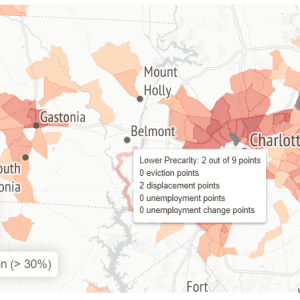
Charlotte is a fast-growing city where the skyline changes by the month and neighborhoods are reshaped at a disorienting pace. But there are a multitude of data sources to help you understand the city and your community. You can start with interactive maps like the Quality of Life Explorer (produced by the Urban Institute in […]

In 2020, Lookout Housing Ventures proposed a redevelopment plan for Brookhill Village, a 36-acre naturally occurring affordable housing development near the intersection of Remount Road and South Boulevard. Although the proposed development has not moved forward, the approximately 120 households of Brookhill Village may be at risk of displacement if Brookhill Village were to be […]

More people than ever are voluntarily leaving their jobs. This phenomenon, known as the Great Resignation, is happening in nearly every employment sector and across a broad range of income levels. Fueled by the pandemic, changes in how we work, increasing work demands, other opportunities and more, workers of all types are looking for a […]

In small towns across North Carolina, churches function as more than places of fellowship and gathering for people — they’re also de facto economic engines. [Read the full report: ‘The Economic Halo Effect’] That’s one of the key findings of a new research report by the UNC Charlotte Urban Institute, in partnership with The Duke […]
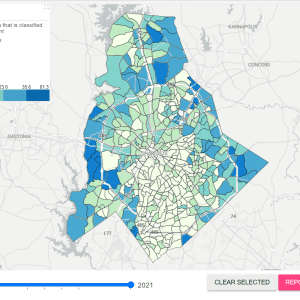
Which parts of Charlotte use the most water? Where is our growth eating up whatever vacant land is left in Mecklenburg County? Where are the racial, economic and other dividing lines that crisscross our community? You can answer these questions and more with the updated Quality of Life Explorer maps published online today. A joint […]
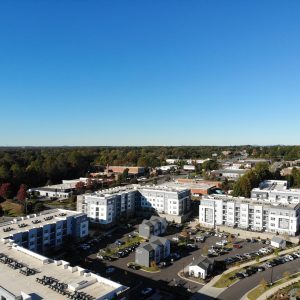
This research was used by USA Today for an investigative series called ‘Segregated by Section 8.’ The series is available online here (subscriber-only). Housing Choice Vouchers are a subsidy that helps extremely low income individuals and families (defined by HUD as earning less than 30% of area median income) afford housing in the private market. […]

The pandemic has transformed so much about the world, including how we work, where we work, and how we commute. As a result of these shifts, Charlotte area transit use has fallen to less than 50% of pre-pandemic levels. And while debates continue on whether these effects are permanent or temporary, city planners are pushing […]
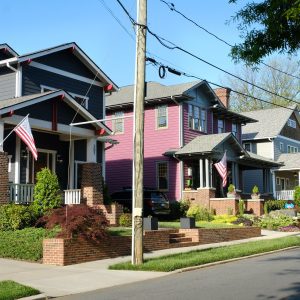
Buying a house in the Charlotte region has, in many ways, never been more challenging. Buyers face a dizzying array of obstacles: A historic supply crunch, skyrocketing prices and homes that sell faster and faster each month. The reasons are numerous. Housing supply never fully recovered after the 2008 economic crash and Great Recession drove […]

A study released this week by the UNC Charlotte Urban Institute sheds light on the unique challenges minority-owned small businesses face and how the Charlotte-Mecklenburg community can better support these enterprises, which are key to community well-being and wealth-building. Defined as businesses with fewer than 500 employees, small businesses comprise 99.9% of all businesses. Small […]

Does where you live — and what jobs you have access to — influence whether you work, and how much you earn? The long-held “spatial mismatch” theory posits that inner city unemployment and poverty has been driven in large part by the increasing physical separation of inner city residents from job opportunities, as suburbs boomed […]
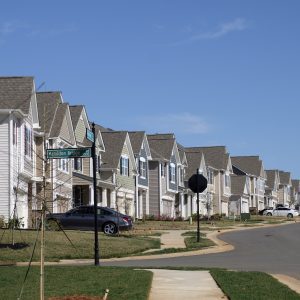
For decades, the single-family home rental market was a small-scale industry, made up almost entirely of local landlords who rented out a few houses they bought as investment properties, or perhaps inherited, or held on to after relocating. But the years since the Great Recession have witnessed a dramatic shift, as Wall Street-backed rental companies […]

This map shows the cumulative number of confirmed coronavirus cases per 100,000 residents in the 14-county region the UNC Charlotte Urban Institute serves. The number varies significantly between the counties, which could be a reflection of factors ranging from population density to how many tests have been administered. This map, and the below graphics, will […]
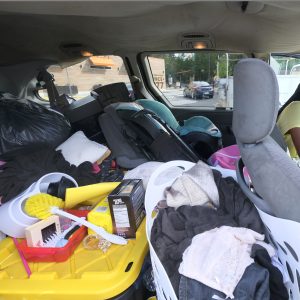
Mecklenburg County Community Support Services recently released the Single Adult Homelessness Integrated Data (SAHID) Report. This is the first community report focused specifically on single adult homelessness. The report is part of the Charlotte-Mecklenburg Housing Instability & Homelessness Report Series, which is funded by Mecklenburg County Community Support Services and completed by the UNC Charlotte […]

This article was written by the UNC Charlotte Urban Institute. Data used in this series was collected in partnership with Leading on Opportunity, Opportunity Insights, Communities in Schools, YMCA of Greater Charlotte, Foundation For The Carolinas, and SHARE Charlotte, with staff funding from The Gambrell Foundation. See more results from the 2019 Mecklenburg Social Capital […]
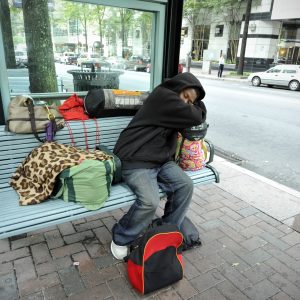
Housing First Charlotte-Mecklenburg (HFCM) was launched in 2015 to end chronic homelessness in Charlotte-Mecklenburg by scaling housing first, particularly the housing first permanent supportive housing model. Housing first programs prioritize housing as an early step in service delivery, have low-barrier admissions policies, maximize client choice in housing and services, use a harm reduction approach to […]

COVID-19 has had an immediate and potentially lasting impact on the housing stability of low-income renters in Charlotte and the nation. Although the Centers for Disease Control and Prevention recently announced a federal eviction moratorium through the end of 2020, missed rent is not being forgiven. Renters need assistance to avoid often insurmountable back rents […]

Driving down South Boulevard or Central Avenue, it’s easy to see the influence of Hispanic and Latino communities in the shops, taquerias and lavanderias that line both roads. It is perhaps an updated version of the historical image of immigration to the United States, not one of tightly packed tenements and ethnic enclaves in the […]
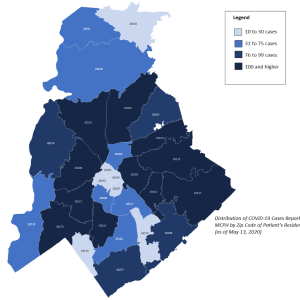
The coronavirus pandemic has generated a flood of data, maps and other resources to track the spread — and places to get help — throughout the region. Many of these resources are scattered across different websites and dashboards. Here’s a brief summary of what’s available, collected in one place. We will update this list as […]

This is the second in an ongoing series, based on a report by the Urban Institute. Read Part 1 here. The report was compiled with support from Bank of America, which partners with the UNC Charlotte Urban Institute and the Institute for Social Capital on research that provides insight into community initiatives. Join us each […]

An array of environmental, cultural and economic connections together give rise to the interdependence of the Carolinas Urban-Rural Connection study region. But none of these connections are more economically significant than the flow of workers within our regional economy. Counties within the region relied on out-of-county commuters for their workforces more in 2015 than at […]

As the McColl Center for Art + Innovation enters its second decade, its leaders are trying to increase collaboration with new and emerging artists. “It’s a very exciting time for Charlotte,” said president and CEO Alli Celebron-Brown. “Looking back at the last decade, everything that is available has increased and shifted…We’re looking at what’s happening […]

For years, food waste has been cast as a financial and moral issue, with money and opportunities to feed the hungry lost when food is tossed in the garbage. It also is increasingly becoming an environmental problem as scraps and spoiled food fill landfills across the country, where they emit potent greenhouse gases. In Charlotte […]

As more people buy homes and rent apartments in fast-growing South Carolina communities on the outskirts of Charlotte, officials increasingly are taking a stand: New development must help pay for schools, law enforcement, fire protection and parks. Over the past few years, elected officials have either approved new impact fees for residential and commercial construction […]
For more than four years, James and Deborah Fallows explored parts of the country that can sometimes get overlooked by the national news media. Flying their own plane, and writing pieces for The Atlantic magazine, they discovered a richness and vibrancy in cities as large as Columbus, Ohio and as small as Ajo, Arizona. Their […]
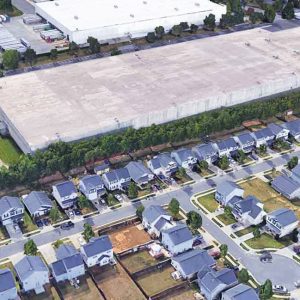
Charlotte saw a boom of low-cost, single-family subdivisions from the late 1990s until a recession hit in 2007. In a new research article, two scholars conclude that many of those subdivisions, touted as “affordable housing,” did not improve life for the lower-income households who moved in. They characterize the unfortunate outcomes of some of those […]

[highlightrule]Unless local governments change transportation strategies, new traffic from rideshare companies will just mean gridlock.[/highlightrule] If you’ve used Uber or Lyft lately, you’re not alone. By the end of 2018, the total number of for-hire car rides, including conventional taxi trips and trips with services like Uber and Lyft, will approach 4.74 billion, surpassing total […]

In recent years there has been a trend (unfortunate, in my view) among a number of housing professionals and political officials to use the term “affordable housing” only in the context of lower-cost, assisted or subsidized housing. In fact, these three terms that describe housing have grown somewhat out of favor and have been conveniently, […]

A long-range game plan to dramatically reduce Charlotte’s greenhouse gas footprint has been an on-again, off-again priority since 2007. That’s when Charlotte City Council adopted its first greenhouse gas emission reduction resolution. And now, after a lapse of 11 years, it’s on again. In one of his first initiatives as newly elected mayor in 2009, […]
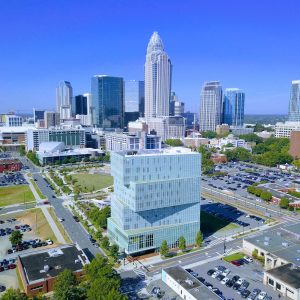
In January 2017, 400 Charlotteans responded to a 15-minute phone survey. The survey was representative of the Mecklenburg County population and, among other questions, asked respondents, “When thinking about Mecklenburg County as a place to live and the opportunities and amenities it provides, how would you rate Mecklenburg County for the following groups of people?” […]

A researcher who studies the Millennial generation and how it differs from previous generations of U.S. young adults will be a featured speaker at the third annual Data Day conference Oct. 6-7. The conference, presented by the UNC Charlotte Urban Institute and the Federal Reserve Bank of Richmond, focuses on demographic trends in the Charlotte […]
EducationNC – a nonpartisan, nonprofit news source aiming to create a bipartisan, statewide conversation about public schools – launched Jan. 12. EdNC.org will provide online data, research, news, information and analysis about major trends, issues and challenges facing N.C. schools. On Mondays, Zach Szczepaniak and Claire Apaliski of the UNC Charlotte Urban Institute – building […]
Collective Impact is a collaborative approach that brings together stakeholders working towards shared goals in order to make significant change in communities. The Collective Impact for Children & Youth project was launched by the United Way of the Central Carolinas in the spring of 2012. This 10-year project involves 16 United Way-supported agencies in Mecklenburg […]

It’s a simple concept: Focus on fewer goals and bigger results. That’s the idea behind the Collective Impact approach United Way of Central Carolinas has adopted. For United Way, that goal for the next 10 years is to increase the graduation rate among the more than 13,000 at-risk children who receive services from 16 United […]
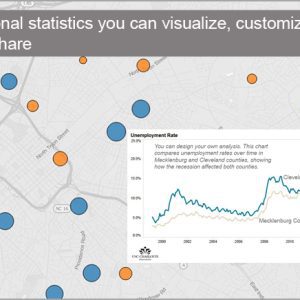
Our Regional Indicators website now has a new home on the institute’s main website. You’ll find all the data that was on the previous site, but with improved functionality and a new look. Why make the change? We have several reasons. First, the new design will be easier for readers to use and to find […]

The Larry King Center of Council for Children’s Rights recently released a new study on out-of-school time. This report, Expanding Learning: Building a Framework for Out-of-School Time, presents best practice research as well as the landscape of local out-of-school time programs. It highlights out-of-school time as “a unique space for learning and development-distinct from home […]
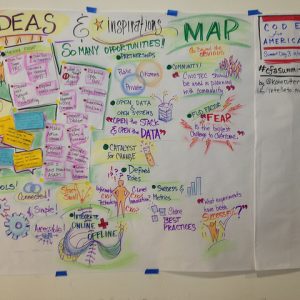
A national nonprofit that works to embed tech-savvy entrepreneurs into city governments, to help them work better, has chosen Charlotte as one of 10 partner cities for 2014. The Code for America fellows will work to create applications that connect residents to city services, create open data platforms or solve a problem with community collaboration. […]

In 2007, Shamrock Gardens Elementary in east Charlotte was showing big improvements, and after years of being listed as a school that could be taken over by the state for low performance, it was close to coming off that list. Then suddenly test scores plummeted (see first graph below). What happened? A new principal? New […]
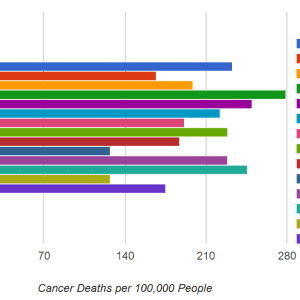
The Charlotte Regional Indicators provides critical benchmarks measured over time and compared to state and/or national data for the 14-county, two-state region.* Follow the links to explore newly updated data with our interactive tools: Maternity & Births – 2011 data now available on infant mortality rates and low birth-weight babies Mortality – 2011 data now […]

In the Carolinas, only Charlotte’s metro area tops 2 million people. Raleigh is roughly half Charlotte’s size at 1.2 million. These two metros have pulled away from the pack of the other Metropolitan Statistical Areas in the Carolinas; no others top 1 million in population. Ten years ago, the metros in the two states were […]

March is Women’s History Month. Its origins date back more than 30 years, when President Carter proclaimed the second week of March as National Women’s History Week in 1980. Seven years later, as the result of a persistent national lobbying effort, Congress passed a public law designating the month of March as Women’s History Month. […]
The Collective Impact Baseline study is part of United Way’s pilot initiative to increase the graduation rate over the next 10 years for the community’s most vulnerable youth. This data will form the baseline against which United Way and its agencies will be measured in the goal to increase the graduation rate for at-risk children […]

Last year, we revived a family tradition – we cut a cedar for our Christmas tree. When I was a kid, my parents, my sister and I would bundle up and scour the options along our field margins. Dad was always willing to take the first one we came to. If it was too big, […]

Charlotte has lagged much of the country in this period of economic recovery, but the region has finally begun to see a few small signs of better days on the horizon. Over the past several months, there has been gradual improvement in the unemployment rate and home price index in the region. These bright spots […]

Domestic violence research has shown that perpetrators frequently use verbal abuse to coerce their victims into appearing at bond hearings in order to support the release of their abuser. This was one of the many facts about domestic violence discussed at the 2012 Judicial Candidates Forum held on October 2, 2012 at UNC Charlotte’s Center […]

Public health is something every community strives for. In our region, Gaston County is no exception. Gaston County has recently experienced a reduction in the percent of adults who are obese by raising awareness of the importance of prevention and keeping individuals healthy. The Behavioral Risk Factor Surveillance System (BFRSS) survey from the North Carolina […]
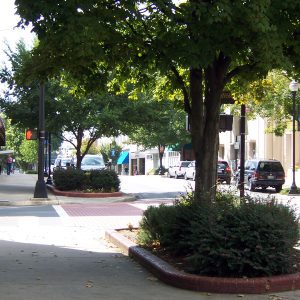
Over the past decade, Gaston County has experienced a decline in the crime rate, helping to create a safer community for residents and visitors alike. This is good news for a county that encompasses one of the largest populations in the Charlotte region. The county’s crime index rate peaked in 2001 with a rate of […]

In 2000, Hispanic/Latinos accounted for only 4.71 percent of the N.C. population. By 2010 the percentage was 8.39, making the state’s rate of Hispanic growth sixth-fastest in the nation. The latest data show that trend is continuing, with the Hispanic population growing from 8.39 to 8.6 percent from 2010 to 2011.* This continuing increase in […]

Last year’s high school dropouts will cost North Carolina an estimated $4.4 billion in lost income, taxes and productivity over the students’ lifetimes, according to a recent Alliance for Excellent Education report.[1] Although most people understand that education level affects income, it may come as a surprise just how much of a difference a high […]
As part of United Way’s Collective Impact Initiative for Children & Youth, The Larry King Center of the Council for Children’s Rights conducted a comprehensive review of dropout prevention programs. This summary table presents information about research-informed dropout interventions and practices being put into action across the country. The following information is included for each […]
As part of United Way’s Collective Impact Initiative for Children & Youth, The Larry King Center of the Council for Children’s Rights conducted a comprehensive literature review of factors that influence school dropout and graduation rates. This annotated bibliography is one of three products from this research and presents more than 40 peer-reviewed journal articles […]
As part of United Way’s Collective Impact Initiative for Children & Youth, The Larry King Center of the Council for Children’s Rights conducted a comprehensive literature review of factors that influence school dropout and graduation rates. This summary table is one of three products from this research and categorizes the dropout predictors by developmental timeframe […]
In March 2012, Goodwill commissioned the UNC Charlotte Urban Institute to conduct a literature review of the workforce development sector’s needs across its eighteen-county region. The report revealed major themes surrounding system needs, target populations and most valuable skills training. To read this report: Download PDF Hannah Guerrier wrote this article while a graduate student […]

With unemployment only beginning to dissipate across the Charlotte region, the demand for workforce development remains at an unprecedented high. In particular, there is a growing need for customized training for disconnected youth, returning veterans, and seniors and a huge demand for stronger soft-skills training. These are among the main findings of a recent study […]
This presentation was given at the 2012 Women’s Summit, during interactive, hands-on sessions on how to use the Wonmen’s Summit Indicator Partner website. The presentation includes an introduction to the UNC Charlotte Urban Institute, the Charlotte Regional Indicators Project, and the Women’s Summit Indicator Partner website. Download PDF

In this period of high unemployment, not everyone has suffered equally. Two populations of particular concern are veterans and youth. Goodwill Industries of the Southern Piedmont provides services to both of these populations and is a lifeline for some of the most vulnerable populations in the Charlotte region. The agency is continuing its innovation and […]

Only 65 percent of economically disadvantaged students in Charlotte-Mecklenburg Schools graduate on time, compared to 74 percent of all students. United Way of Central Carolinas aims to diminish this disparity with a new, innovative program. United Way of Central Carolinas announced Thursday, Feb. 23, the beginning of a new initiative to improve academic success for […]

In September 2009, Goodwill Industries of the Southern Piedmont commissioned the UNC Charlotte Urban Institute to assess the need for a workforce development program for youth in the community and recommend any changes that should be made to put its fledgling Youth Job Connection program on the right track. As part of this study, the […]
In September 2009, Goodwill Industries of the Southern Piedmont commissioned the UNC Charlotte Urban Institute to assess the need for a workforce development program for youth in the community and recommend any changes that should be made to put its fledgling Youth Job Connection program on the right track. Over the course of the study, […]
This report analyzes how women fared in the workplace at the national level after the Great Recession, which ended in June 2009, compared to their status before it began. This report also compares women to their male counterparts before and after the recession in terms of total job growth, job growth in the public sector, […]
This report focuses on the disparity in earnings between men and women across industries in Mecklenburg County. The wage gap or ratio is an often cited statistic to highlight the disparity between the earnings of men and women. Most sources cite the wage gap in the United States being between 75 and 80 percent, meaning […]
This report examines how men and women in Mecklenburg County fared during the Great Recession. It examines the overall features of the labor market and analyze some of the residual impacts the recession had on families. The goal of this report is to understand the local conditions for women and men during the recession and […]

What are the greatest needs facing our community? United Way of Central Carolinas posed this question to Mecklenburg County residents via the UNC Charlotte Urban Institute’s Annual Survey last spring. The survey found the greatest perceived community health need is preventive care; the greatest perceived need for children and youth is dropout prevention; the greatest […]
In June 2010, United Way of Central Carolinas commissioned the UNC Charlotte Urban Institute to conduct a comprehensive community needs assessment for its five-county service area. The primary purpose of the study was to pinpoint the community’s greatest needs and identify gaps in the current array of human services. This study is one of several […]
The UNC Charlotte Urban Institute worked with Council for Children’s Rights and the Larry King Center for Building Children’s Futures to design and administer a survey and conduct focus groups. This research identified needs in the community and ways in which the Nurse Family Partnership could fill gaps in services to first-time, low-income mothers. Findings […]
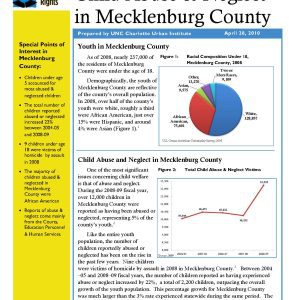
This report was compiled by the UNC Charlotte Urban Institute in April 2010 in collaboration with Council for Children’s Rights in honor of the National Child Abuse Prevention Month. The study examines a number of indicators related to child abuse in Mecklenburg County over time and in comparison to the state of North Carolina. Download […]

Two different studies of Mecklenburg County’s workforce development programs, sponsored by Goodwill Industries of the Southern Piedmont, were conducted in the past two years– one looking at adults ages 25 and older, the other looking at youth ages 14-24. Analysis of the two studies revealed many of the same problems and offered many of the […]

After the initial windfall of data from the 2010 Census that was followed by media outlets all over the country, the next wave of Census data is upon us. In this new age of the American Community Survey, we now get considerable data more often than every 10 years. For researchers like me, who work […]
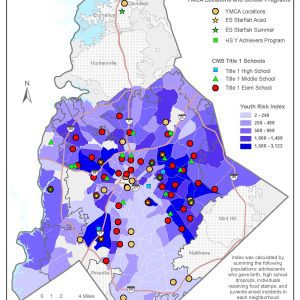
This map shows the locations of YMCA facilities and youth programs (Starfish Academy and the Y Achievers Program) as well as Title I schools, all in relation to the youth risk index of Charlotte neighborhoods. Starfish Academy is a YMCA program that serves pre-k through second grade students who are currently reading below grade level […]
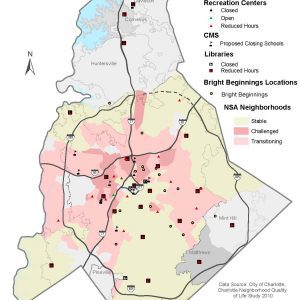
This map shows the location of public recreation centers, libraries, and schools in relation to the quality of life status of Charlotte neighborhoods, with particular emphasis on facilities that have been closed or now have reduced hours. It was created by the UNC Charlotte Urban Institute, in collaboration with Council for Children’s Rights, to determine […]
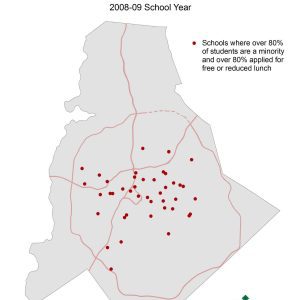
This series of maps shows the percent of students at each school in the Charlotte-Mecklenburg Schools (CMS) district that are a racial minority and the percent that applied for free/reduced lunch at two points in time, the 2001-02 and 2008-09 school years. The final two maps show only those schools in which the proportion of […]
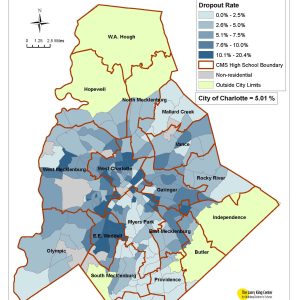
The UNC Charlotte Urban Institute created this series of maps, in collaboration with Council for Children’s Rights, in October, 2010, to provide background information and context for principals of Charlotte-Mecklenburg (CMS) high schools and the CMS Investment Group (a group of private donors and community leaders that pledged $55 million to improve graduation rates and […]

Amid the pervasive gloom and depression about the future of American cities I was lucky enough to visit recently two very different American places that hold out some hopes for a sustainable future here in the USA. On the face of it, Champaign-Urbana, Ill., and Boston, Mass., could not be more different: one a large […]
A Comparison of Findings and Recommendations of Two Reports: “Preparing Our Youth for Work: A Community Assessment”, August 2010 UNC Charlotte Urban Institute and “Workforce Development Sector Analysis: Focusing on Workforce Development for Adults with Barriers to Employment in Charlotte-Mecklenburg”, August 2011 Carol Morris Consulting and The Lee Institute Two different studies in the past […]

In Garrison Keillor’s mythical hometown of Lake Wobegon, all the children are above average. In terms of where the college-educated live, there are a few Lake Wobegons, and then there is everywhere else. In North Carolina, the state’s top two cities, with their higher concentrations of college-educated residents and their population heft, boost the state’s […]

Charlotte-Mecklenburg high schools have some of the region’s highest graduation rates. They also have some of the lowest. A look at recently released public high school graduation rates for North Carolina shows a wide disparity in Charlotte-Mecklenburg Schools. Yet CMS as a whole, compared to other systems in the region, has the lowest overall graduation […]

Local perceptions may not have caught up with the new reality in the Charlotte region’s manufacturing economy. Even before the recession began in 2007, declines in the textile and furniture industries were changing the structure of local employment. As the downturn continued, counties that depended less on textile and furniture manufacturing lost fewer jobs. The […]
In June 2010, United Way of Central Carolinas commissioned the UNC Charlotte Urban Institute to conduct a comprehensive community needs assessment for its five-county service area. The primary purpose of the study was to pinpoint the community’s greatest needs and identify gaps in the current array of human services. This study is one of several […]

The Larry King Center (LKC) of the Council for Children’s Rights recently released a plan for improving school readiness for the children in Mecklenburg County. “Unlocking the Potential of a Community: The Plan for School Readiness” is based on data, research, and input from six action teams comprised of community leaders, agency directors, and parents […]
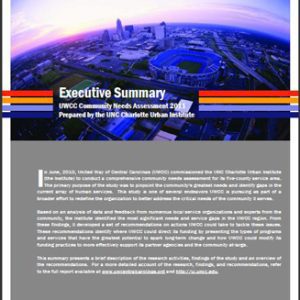
In June 2010, United Way of Central Carolinas commissioned the UNC Charlotte Urban Institute to conduct a comprehensive community needs assessment for its five-county service area. The primary purpose of the study was to pinpoint the community’s greatest needs and identify gaps in the current array of human services. This study is one of several […]

In 1960, the median age for the United States was 29.5 years, meaning that half the population was older than that, and half was younger. In the 2010 Census, the median age for the country moved up to 37.2 years, reflecting what many demographers refer to as the “graying of America”. As with other changing […]
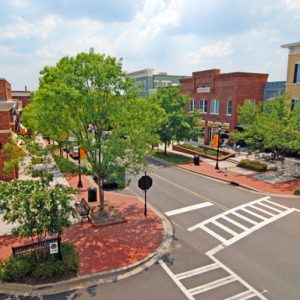
The recently released South Carolina data from US Census 2010 now allow for a more complete picture of growth in the Charlotte Region in the last decade. The South Carolina counties of Chester, Lancaster and York form the southern flank of the 14-county Charlotte Region. The census data show York County was the second-fastest growing […]
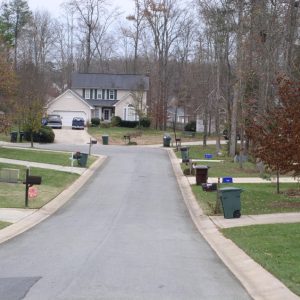
Controversies over school closures in Charlotte and Mecklenburg County over the past year have refocused public attention on issues of race in our community. While the explosive growth of the Hispanic population has been a more recent demographic trend, the issue of residential segregation among blacks and whites has a much longer history in this […]
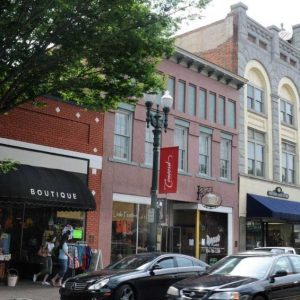
On Wednesday, March 2nd, the first set of data from the 2010 Census was released for North Carolina counties, cities, towns, etc., providing the first hard population counts for these areas since 2000. We know that the Charlotte region as a whole has grown rapidly in the last decade, but how has that growth been […]

Headlines have highlighted multiple demographic trends affecting Charlotte and the metro area over the last decade. “Carolinas lead the nation in Hispanic growth,” read the headline of a Charlotte Observer story in 2008. The city has ranked highly on “Best City” lists for African Americans throughout the 2000s. Moving beyond the headlines, however, is there […]

Mecklenburg County, N.C., is home to the state’s largest city, Charlotte. Most people living in Mecklenburg County today were born outside of North Carolina. U.S. Census Bureau data estimates from 2009, released earlier this fall, put that number at just over 58%. The new diversity of the county has some interesting twists. For instance, more […]

The new Charlotte Regional Indicators Project website will go live in the next few months. This is part of a series of articles leading up to that date that will provide analysis of some of the data being tracked by the Indicators Project. How do you paint a picture of the region’s progress on environmental […]

The new Charlotte Regional Indicators Project website will go live in the next few months. This is the first in a series of articles leading up to that date that will provide analysis of some of the data being tracked by the Indicators Project. Nothing is more heartbreaking than seeing a child go without. During […]

After boasting one of the nation’s most successful mandatory busing plans to desegregate the district’s schools, Charlotte-Mecklenburg Schools (CMS) has once again become increasingly segregated. This shift has been documented meticulously through numerous recent studies and disseminated to the public through coverage in the local media. In partnership with Council for Children’s Rights, as part […]

The UNC Charlotte Urban Institute is collaborating with community partners to collect and analyze data that will be available through the Institute’s interactive Charlotte Regional Indicators Project website, due out Fall 2010. The resulting databank will build on the Institute’s Charlotte Regional Indicators project to address social, economic, and environmental challenges facing our region. Below […]